A grant from the National Research Fund of Ukraine has enabled the purchase of a modern microwave reactor for chemists at Uzhhorod National University
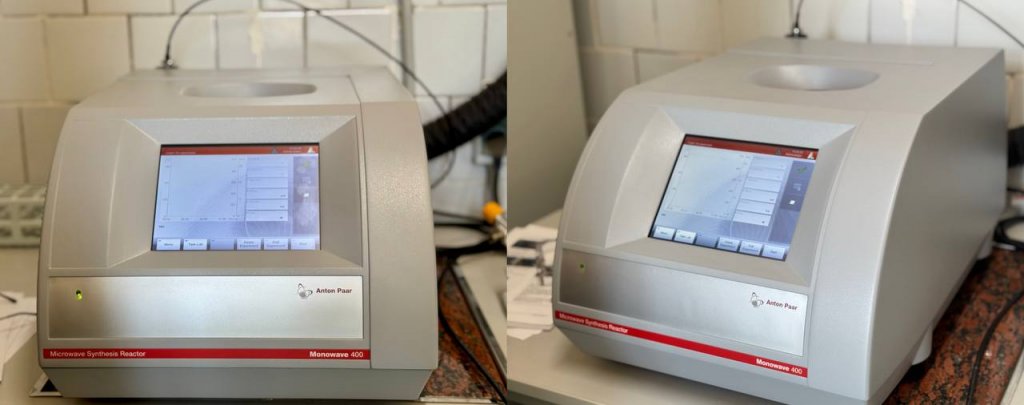
Despite the challenges facing our country, Ukrainian science continues to move forward, opening new horizons for research and education. One such step was the grant received by our chemists from the National Research Fund of Ukraine for the implementation of project No. 2023.03/0176 ‘Strategy for the targeted synthesis of functional chalcogenide materials for medical and energy needs.’ Its total budget is 9.5 million hryvnias, of which 4 million has been allocated for 2025. Within the framework of the project funding, scientists from the Department of Organic Chemistry were able to purchase a modern Anton Paar Monowave 400 microwave reactor worth 1.47 million hryvnias. According to scientists, this equipment opens up completely new opportunities for both research and education.
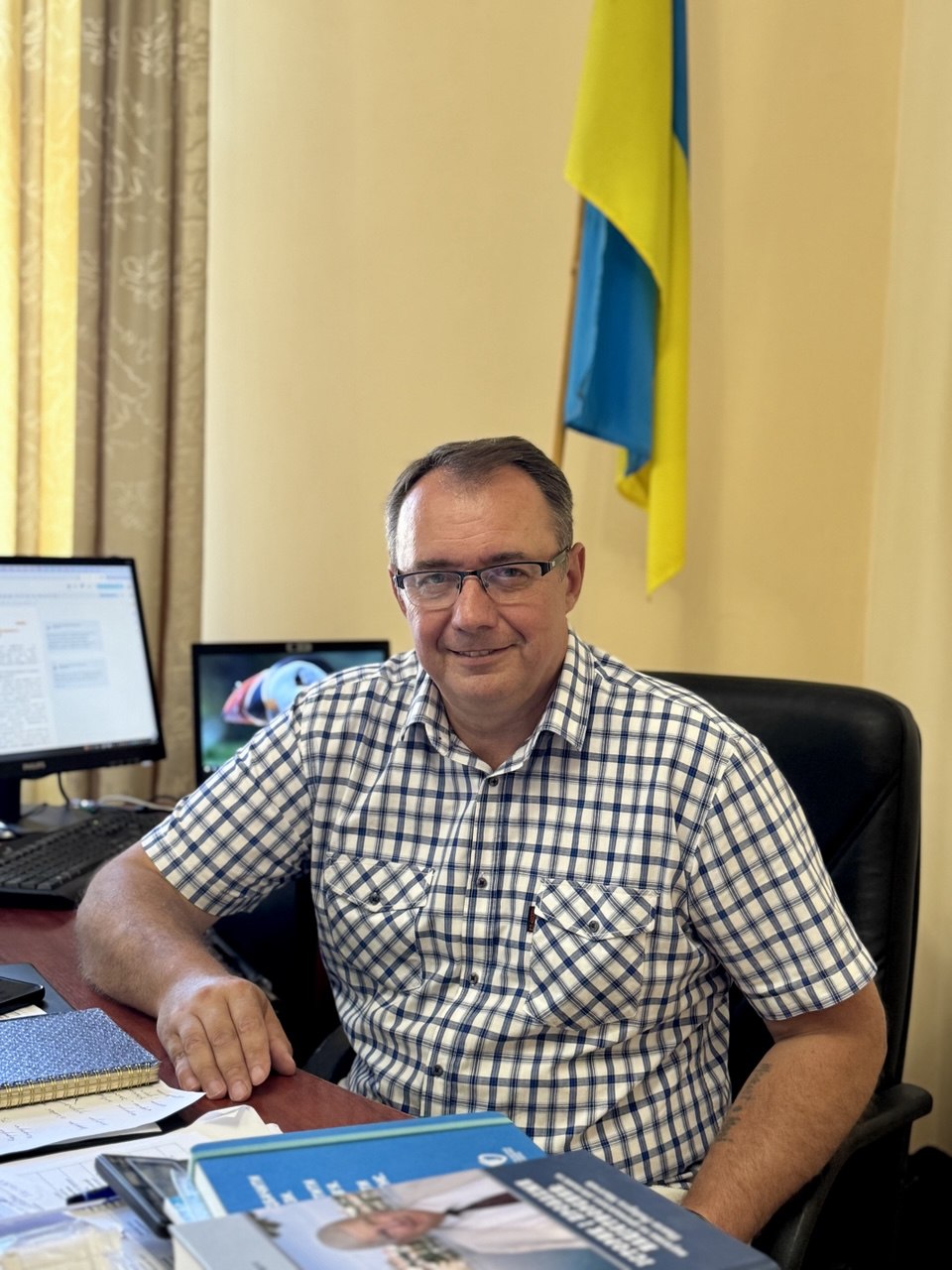
UzhNU Vice-Rector for Scientific Work, Professor Ivan Myroniuk, emphasises that the very fact of receiving such a grant is an indicator of the high level of Uzhhorod chemists: "The National Research Fund supports only advanced science in Ukraine, so funding is significant and directed exclusively to important and large-scale initiatives. This grant is an indicator of the presence of truly advanced science in our country, and it emphasises that such support is particularly important in times of war. Allocating significant funds from the budget to support research in such conditions is a great achievement, because it is not only about chemistry, but also about the development of all natural sciences."
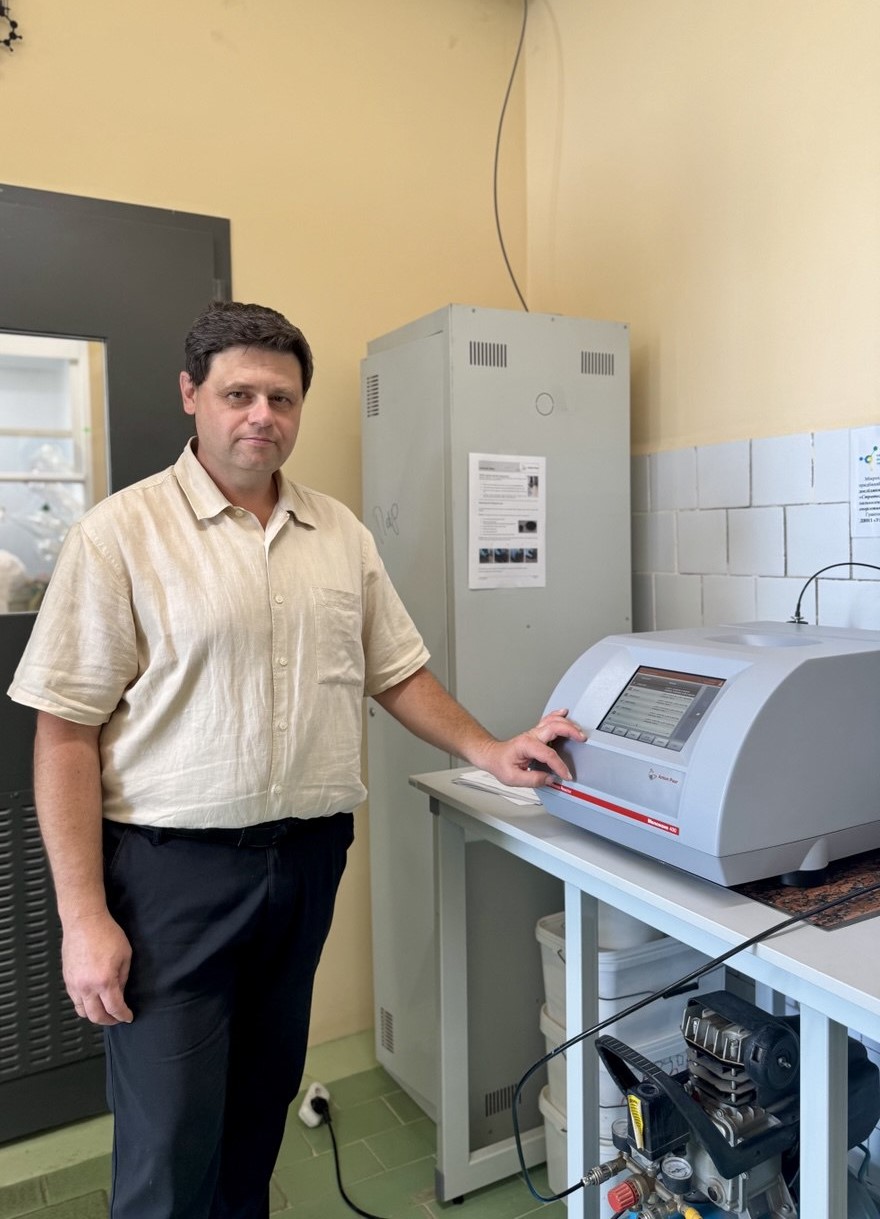
The device itself, which takes the scientists' work to a new level, is no less important. With the help of a microwave reactor, it is possible to carry out reactions that until recently existed only in theoretical calculations. Project manager Dr. Mykhailo Slyvka, Professor of Chemistry, explained the peculiarities of the technology: "Under normal conditions, each solvent has its own heating limit. For example, water boils at 100°C, but when the reaction requires 120°C, it becomes much more complicated and stops. Here, this barrier has been removed: we can heat up to 350°C in a closed system, under pressure and temperature control. This opens up new conditions for reactions that we could not previously achieve."
A significant advantage of the new equipment is the reduction in the time required for experiments. Whereas previously research took hours, now results can be obtained in a matter of minutes, with minimal energy consumption. "If a reaction takes 4 hours on an electric hotplate, it takes 4 minutes in a microwave reactor. And energy consumption is several orders of magnitude lower. This is green synthesis, when we save resources and reduce our impact on the environment," emphasises the professor.
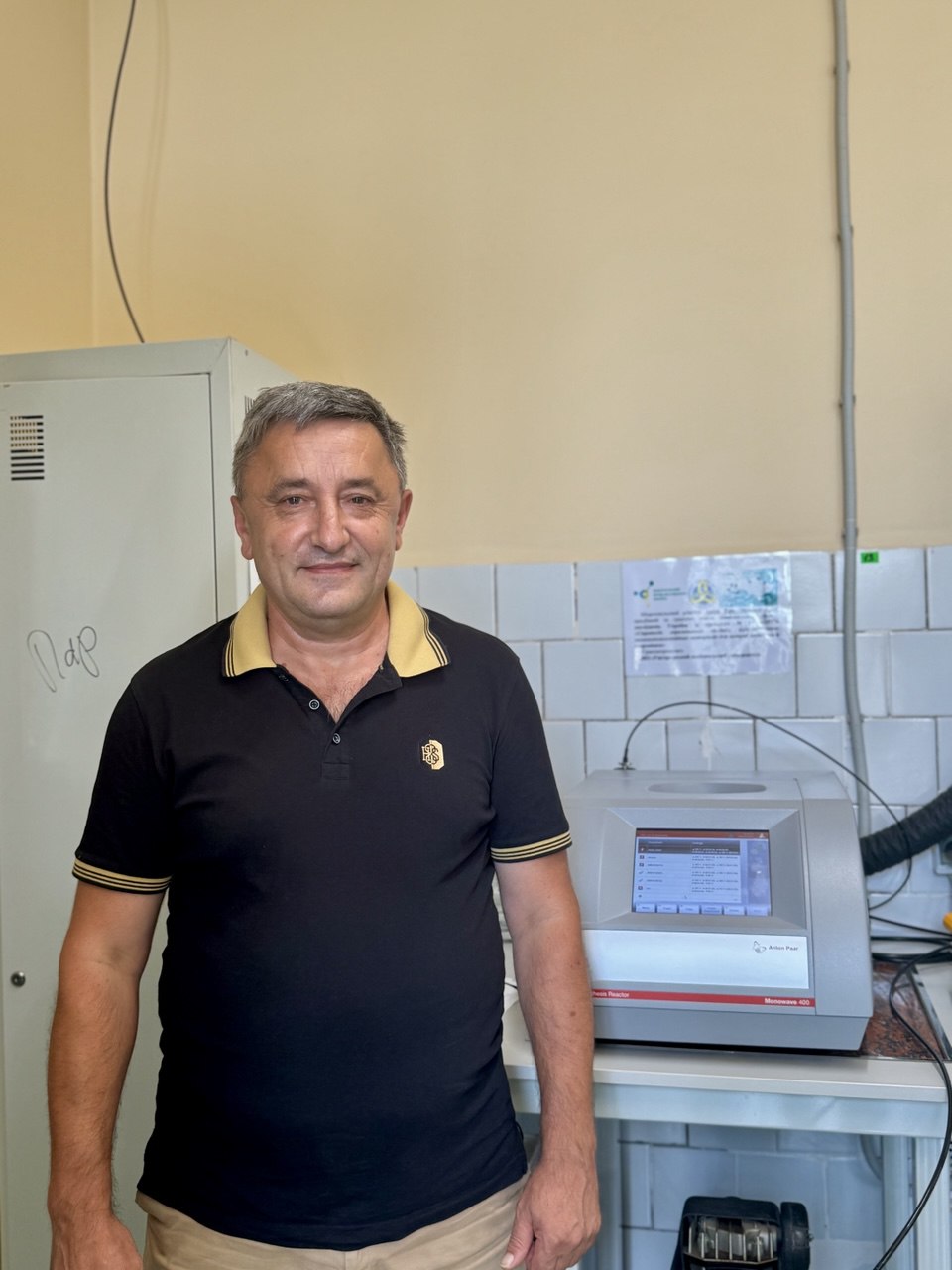
The new device is important not only for scientific research, but also for the educational process. Now students will be able to learn modern synthesis technologies in practice, which were previously only available to them in textbooks. The head of the Department of Organic Chemistry, Professor Mykhailo Onysko, provided more details about the educational aspect: ‘The master's programme in Modern Organic Synthesis includes laboratory work. Without modern equipment, this course would be nothing but theory. Now students will be able to conduct real experiments, just like they do at leading universities around the world.’
The use of a microwave reactor will also improve the quality of scientific work. It will become the basis for qualifying papers, dissertations and publications in international journals. "This will give our students and postgraduates the opportunity to conduct research at a level recognised by international scientific journals. They will enter the profession prepared to work with cutting-edge equipment," adds Mykhailo Onysko.
In addition, the new tool opens the door to international scientific cooperation and new grant programmes. The availability of such equipment raises the status of the university and allows it to join global initiatives, attract funding and expand its material and technical base.