Scientists of Uzhhorod National University start the 2nd stage of the project of the National Research Foundation of Ukraine
On 15 March, UzhNU will start the 2nd stage of the NRFU project No. 2023.03/0176 ‘Strategy for the directed synthesis of functional chalcogen halide materials for the needs of medicine and energy’.You can read more about it here.
First of all, it is worth noting that this project is somewhat different from the classic state budget topics. Each stage is considered as an independent module with reporting, after analysing which the NRFU decides within two weeks whether to continue the work.
Preparations for the start begin with the re-execution and signing of all documentation (as for a separate programme) - from a new project registration, implementation agreement and terms of reference for this year to fixing the current composition of the executors.
The main goal of the second stage is to develop strategies for the synthesis of chalcogen halide materials based on functional and condensed derivatives of azo-heterocycles and argyrodite-type compounds to study their chemical, physicochemical, biological properties and the possibility of using them as bactericides, fungicides, antioxidants, light energy converters, solid-state superionics, and electrolytes for lithium-ion batteries.
The team has the following tasks:
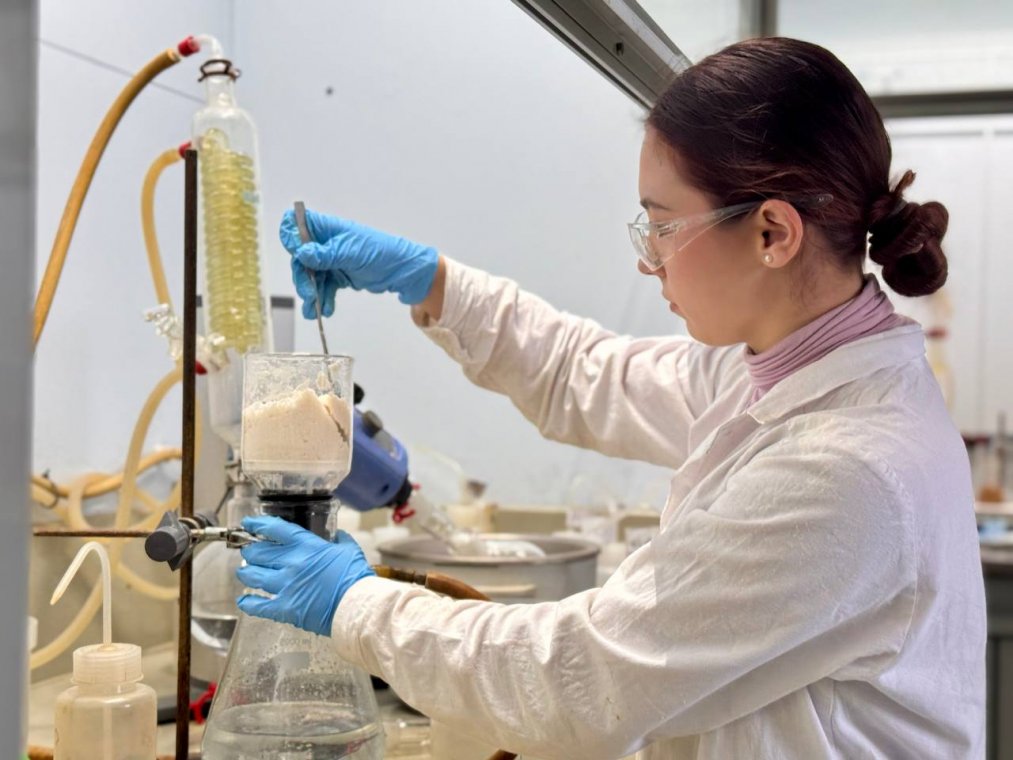
- To develop and optimise methods for the synthesis of chalcogen halide precursors, 1,2,4-triazoles and other azoles; pyrimidines and other diazines; binary and ternary inorganic materials.
- To develop close to optimal technological modes of synthesis based on the results of differential thermal and X-ray phase analyses and the growth of single crystals of Ag6+x(P1-xSnx)S5I composition in the entire concentration range.
- Investigate the physical, chemical and biological properties of the obtained samples; determine the structure.
- Modelling of physical and biological properties of the obtained samples; structure optimisation (study of the effect of ion exchange, variation of the nature of substituents, heterocycle, chalcogen atom, halogen atom; influence of laser irradiation).
The executive team remained almost unchanged after the first stage. The working group includes 2 Doctors of Sciences and 4 Candidates of Sciences from the Departments of Organic and Inorganic Chemistry of the NNIPhE and the School of Medicine. The project leader is Mykhailo Slyvka, and the main performers are: Mykhailo Onysko, Oleksandr Kokhan, Vasyl Sidey, Nataliia Korol, Valerii Pantyo. Also this year, Marianna Povidaychyk will be involved in the synthesis of heterocyclic precursors. The youngest colleague, Hanna Aleksyk, has temporarily taken a maternity leave.
The funding for the project is significantly higher than the circulation for regular state budget topics (almost 4 times). In particular, UAH 4,000,000 was allocated for 2025. There are both traditional funding items and those specific to EU projects, such as paying for free access to the publication or paying for scientific services from a third-party organisation, and UAH 170,000 is currently planned to be allocated for these needs.
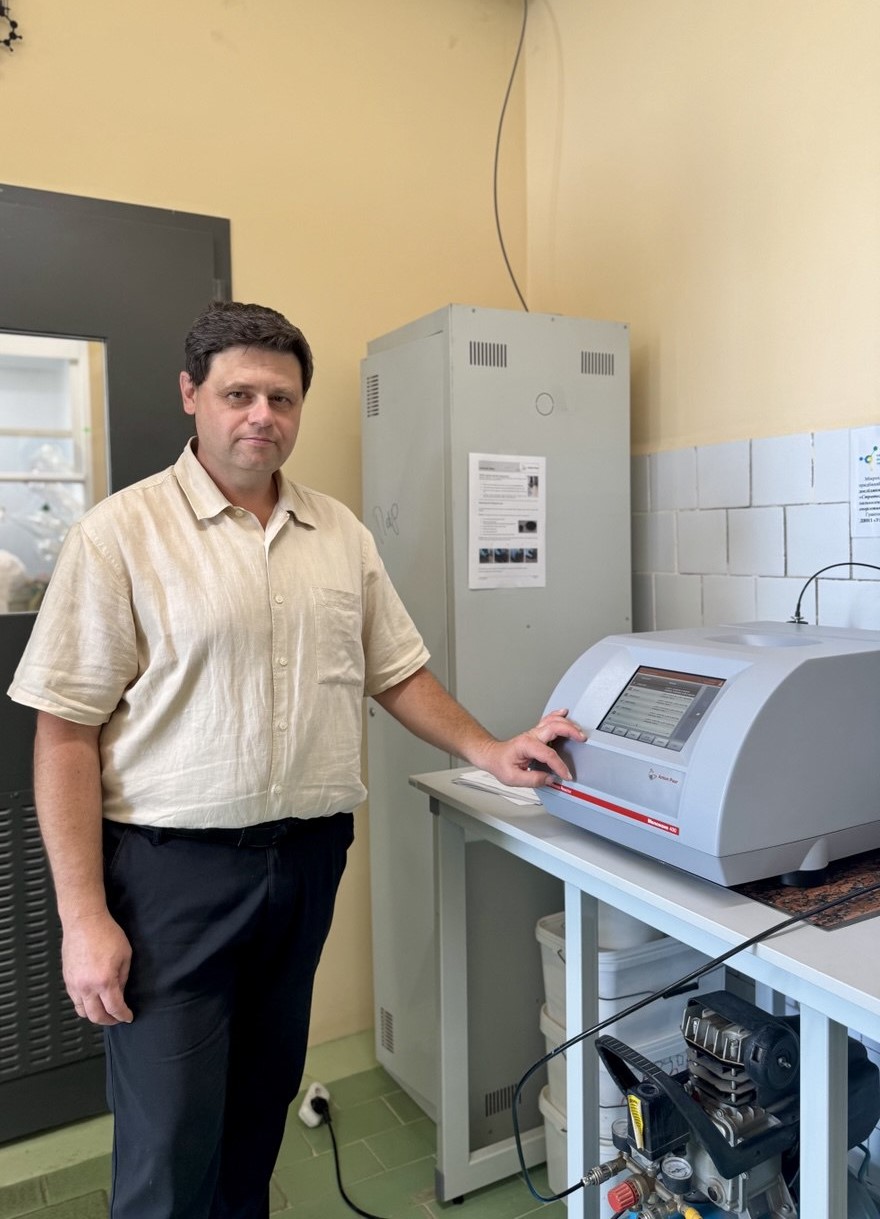
Fortunately, the budget allows us to provide not only all the necessary consumables but also expensive equipment. The main requirement is clear procurement planning and transparency. This year, it is planned to purchase a MONOWAVE 400 microwave oven with all the necessary components and consumables for organic synthesis. The estimated cost is UAH 1,500,000. ‘This unique equipment will allow us to implement our usual methods of creating organic functional materials in completely different conditions and the results may exceed all our expectations!’ says Mykhailo Slyvka, PhD, Professor of Organic Chemistry, ’We will install the device in a separate laboratory. Since there is a metal armoured door, it will be reliably protected! Why do we need this equipment? Our synthesis process is simple, in particular, it is characterised by a selective yield of mono-products in 50%+ of cases, another 20-30% of the mixture of products with low yields - we separate and purify - is more expensive, but we achieve the target result. There are still about 20% of syntheses with a negative result, but we hope to solve this problem with the help of this device. Thanks to it, the same heating and mixing conditions work in one complex, which does it all evenly, without any interruptions in the process. This equipment is called a microwave multi reactor.’ Mikhail Vasilyevich adds that in the future, after mastering the device, the team will also conduct trainings for fellow scientists in our western region. In addition, there are plans to introduce the novelty into the laboratory practice for teaching students, thereby improving their overall qualifications and training.
As a result of this part of the project, it is expected that the developed and optimised technologies for the synthesis of chalcogen halide precursors of organic and inorganic materials will be used to create targeted samples with valuable properties for the needs of medicine and energy in the next stage. The study of the influence of US, MWI on the regio- and stereo-selectivity of the synthesis of target heterocycles will allow to optimise the synthesis of organic functional materials. Modelling of the physical and biological properties of the obtained samples will optimise and narrow down the search for the leading structures, which will allow using these results for their synthesis and experimental study of their properties. The developed methods and approaches to the synthesis of organic and inorganic precursors are valuable for the educational process: new topics (content modules) will be introduced in teaching courses for students of chemical specialities, as well as in the training of qualified personnel.