
Scientists of Uzhhorod National University complete the 1st stage of the project of the National Research Foundation of Ukraine

In July 2024, the scientific team of Uzhhorod National University won the project of the National Research Foundation of Ukraine 216/0176 “Strategy for the directed synthesis of functional chalcogen halide materials for the needs of medicine and energy”. Employees of the Departments of Organic Chemistry, Inorganic Chemistry and Microbiology, Virology and Epidemiology of Infectious Diseases are also involved in its implementation. This project is the first in UzhNU, in which our university is the only grantee; the project is fully funded by the National Research Foundation of Ukraine, the total amount of the grant is UAH 9.5 million.
The NRFU has been actively working and providing funds for research to Ukrainian scientists since 2020. As a rule, before that, funding was provided both for the grantee organization and for partner organizations of sub-executing agencies. In 2024, the “Advanced Science in Ukraine” competition is focused on projects in which one university is the executor.
The first stage of the project 216/0176 lasts from August 1 to December 15, 2024 and includes a research and publication component. The project implementers, as well as master's and PhD students, have been actively involved in the work. The program is important for the Department of Organic Chemistry in terms of expanding the material base, as well as enabling scientists to carry out state-of-the-art research in collaboration with other departments. Funding for Stage 1 of the project is about UAH 2.5 million for 4.5 months of research. The funds have already been used to improve the material base, including the purchase of drying equipment, an ultrasonic washer, pipette dispensers, anchors for magnetic stirrers and rods for mechanical stirrers, cuvettes, and other consumables, which helps to improve the quality of work.

Head of the Department of Organic Chemistry, Professor Mykhailo Onysko, PhD, and Professor Mykhailo Slyvka, PhD, spoke about the results of the first stage and plans. “First, the results are in the synthesis. I will talk about the part that is performed by the project participants from the Department of Organic Chemistry. In this case, we have already synthesized a sufficient number of precursors for the synthesis of chalcogen-halogenated organic compounds of heterocyclic nature, synthesized condensed compounds in which new approaches have been tested, studied the physicochemical characteristics of the obtained samples, clearly proved the structure, and these substances have already been tested for their biological activity,” said Professor Mykhailo Onysko, the responsible project leader.
“The results of the synthesis and primary study of the properties have already been submitted for publication in the editors of the leading scientific journals of the Scopus database and Web of Science, including the journal Q1. Some results are also presented in specialized journals, including Ukrainian ones, which managed to break into the Q4 category, which confirms the prestige of our publishers,” adds project leader Professor Mykhailo Slyvka.
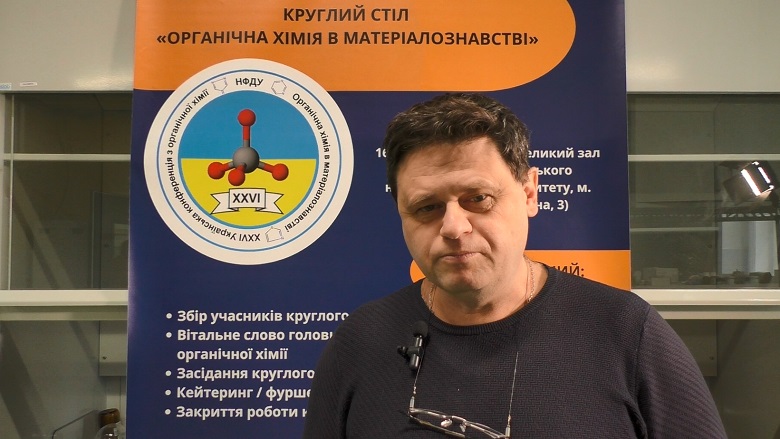
The project participants have already presented their findings at two professional events held in Uzhhorod - the XXVI Ukrainian Conference on Organic and Bioorganic Chemistry and the International Scientific Forum “Chemistry and Ecology Nexus: Igniting Innovation and Sustainability for Future Generations”. In total, there were 10 reports directly related to the results obtained under the project of the National Research Foundation of Ukraine. The project itself, its objectives and goals were presented during the roundtable “Organic Chemistry in Materials Science”, which was part of the XXVI Ukrainian Conference on Organic and Bioorganic Chemistry. Later, all these results were processed, verified, and actually formed the basis of scientific papers and articles.
In addition, the first positive results were obtained in the development and implementation of green approaches. The techniques traditionally used in electrophilic cyclization often involve toxic reagents. After several months of intensive work, the scientists were able to solve the problem with one of them - bromine. They replaced it with non-toxic reagents, in particular potassium bromide, which is freely available in pharmacies as a drug, and achieved the same result with almost the same product yield. This serves as a starting point for new research, which is already groundbreaking in this area. In the future, we plan to replace not only bromine but also other reagents with less toxic or non-toxic ones. There are already initial results - these are organic samples that microbiologists have tested and found to have high fungicidal and bactericidal effects.
During this time, the first attempt to develop a predictive QSPR model for chalcogen halide argyrodite materials was also made by scientists from the Department of Inorganic Chemistry. The representatives and direct executors of the project, Oleksandr Kokhan, Associate Professor of the Department of Inorganic Chemistry, and Vasyl Sidey, PhD, Senior Researcher, told us more about the work of this department. They study chalcogen halide-type structures, such as perovskites and argyrodites. These structures can potentially be used as solar-to-electric converters and as energy storage materials. In particular, they are suitable for use in the design of batteries, as these materials allow for efficient storage of stored energy.
“My part of the work focuses on solid solutions based on chalcogen halide argyrodites with a complex structure. These materials have high ionic conductivity and are superionic electrolytes. They can be used as electrodes for batteries, as well as narrow-band materials that convert solar energy into electricity more efficiently with high efficiency compared to modern materials,” says Oleksandr Kokhan.

The research also covers materials based on perovskites, known for their wide range of applications. In particular, organic-inorganic perovskites, which can be used for both energy conversion and energy storage.
“The goal of this research is to modify the structure of perovskites by replacing one of the components, a large inorganic cation, with an organic one, a triazole derivative,” Vasyl Sidey notes. - “This substitution opens up opportunities for precise control of the material's properties, giving it new characteristics. For example, the organic cation can be modified by varying the nature of the substituent, which allows us to obtain a product with the desired parameters.”
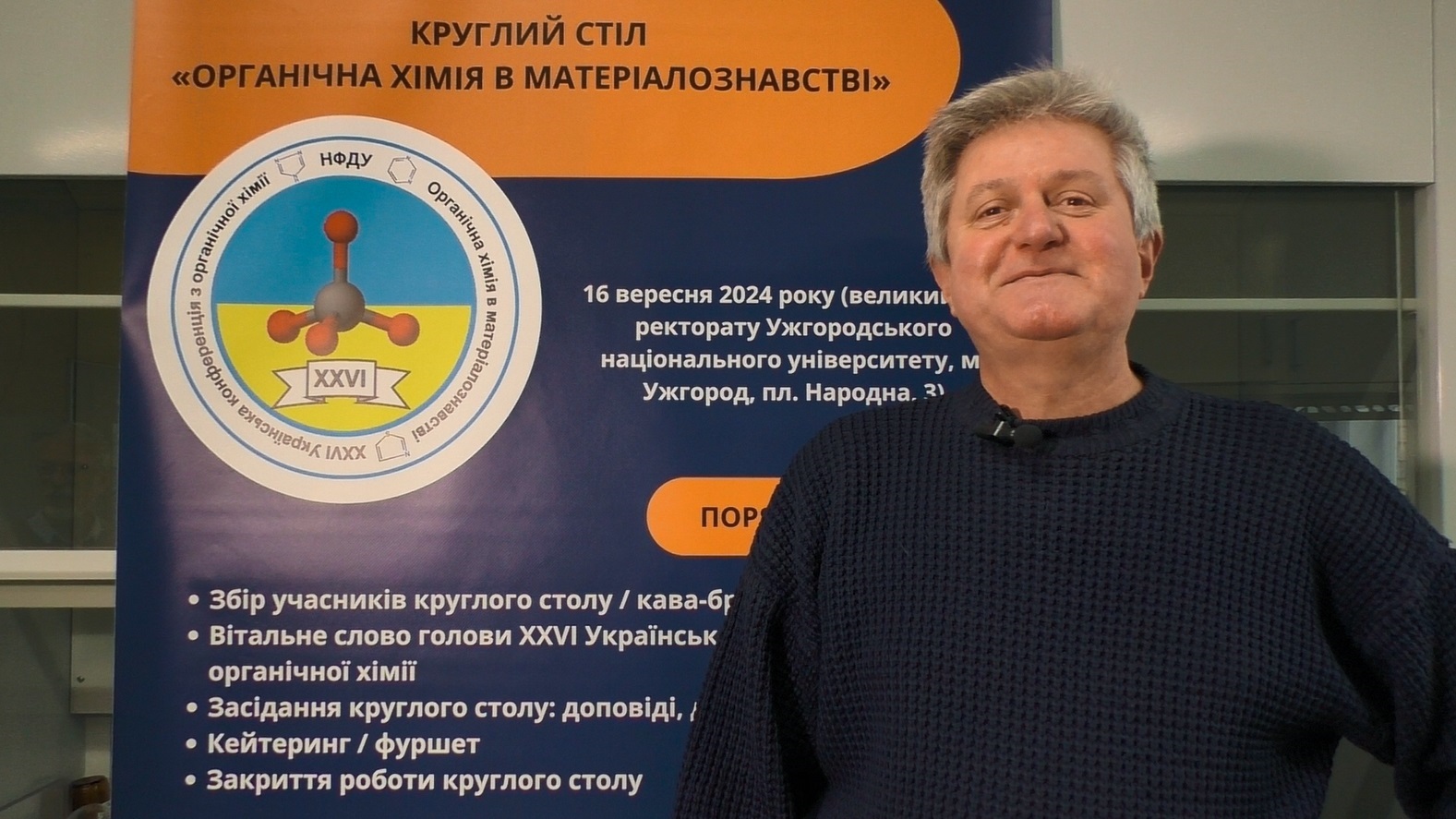
Scientists are also developing technologies to produce such materials. They note that they have already synthesized both the starting components and complex chalcogen halides, as well as solid solutions based on them in a wide range of concentrations. In addition, single crystals were obtained and an optimal technology for their growth by the melt method was developed. Patent and utility model applications have also been filed. The next step is to study the electrochemical and electrophysical properties of these materials, as well as to select technological conditions for obtaining samples suitable for larger-scale experiments for practical use.

The Department of Microbiology, Virology and Epidemiology of the School of Medicine also joined the project. Part of it is to analyze the antimicrobial activity of the substances under study. In fact, this activity is studied against the most common opportunistic pathogens. These are Staphylococcus candida, a yeast-like fungus, E. coli, Pseudomonas aeruginosa, and Klebsiella. Most of them belong to the so-called ESCAPE pathogens (bacteria or yeast-like fungi that are leaders in the ability to acquire and spread antibiotic resistance).
Valeriy Pantyo, PhD, Associate Professor, told more about the research: “So far, we have investigated 19 newly synthesized chemicals for these pathogens and have used screening methods as well as quantitative methods to address the impact on planktonic forms. We also plan to study the factors of possible impact in relation to the most active substances, the leading compounds that have the greatest biological effect. As for the next research, it is the study of biofilm forms that are more common in nature and have greater resistance to both physical and chemical factors.”