UzhNU celebrates the Day of Science: results, challenges and plans of university scientists

Traditionally, on the third Saturday of May, the Ukrainian scientific community celebrates its professional holiday - Science Day. This date is intended to honour the merits of science to society and the achievements of scientists, of whom we are rightly proud and on whom we place great expectations. After all, science is the foundation of the nation's intellectual potential and its future. Even in difficult times of war, national education and science are finding ways to develop and undergo powerful transformations and changes that open up opportunities for the future. On the occasion of the Science Day, we interviewed the scientists of Uzhhorod National University about their most significant scientific results of the past year, the challenges they have to overcome in the implementation of scientific tasks, and, of course, about their development plans for the coming years.
RESEARCH AREA ‘BIOLOGY AND HEALTHCARE’
Nadiia BOIKO, PhD, Professor, Rector's Advisor on Innovations, Head of the Department of Medical and Biological Disciplines:

- In 2023, we completed the first cohort study in Ukraine to investigate predictors of atherosclerosis, which examined the microbiome of 350 Ukrainians from two regions - Zakarpattia and Odesa. The study identified priority early biomarkers that are triggers of vascular elasticity decline and, consequently, aging. A unique publication co-edited by me and Professor Olga Golubnitskaya from the EPMA was published - ‘Human Microbiome, 3P Medicine: First Clinical Protocols’. We created the first operating joint programme initiative (JPI) in Ukraine ‘Nutrition and Health of Ukrainians’ with the participation of 4 institutions: the Association of Gastroenterologists of Ukraine, the Association of Nutritionists of Ukraine, UzhNU and KNU, which, in particular, immediately enabled UzhNU students to offer a new elective course where they could learn about innovative methodological digital approaches, algorithms and programmes for drawing up individual nutrition plans based on the person's omics profile. As part of our new initiative, last year, in partnership with the Uzhhorod City Multidisciplinary Hospital, we launched a programme of physiological recovery for wounded military and civilians through targeted correction of their microbiome to prevent the onset of post-traumatic stress disorders. The main objective (material and technical) challenges that have to be overcome are: reduced funding for science, and thus the need to ensure many processes from own sources; the outflow of personnel and brains caused by the war; administrative and bureaucratic inefficiencies of the system, lack of professional approaches to solving urgent problems that have always been and are still relevant for the development of Ukrainian science. The second important problem, or rather subjective obstacles to development, is related to the existing facts of plagiarism, pseudoscience, non-transparent schemes for funding research projects in the country, and uncoordinated administration. The third significant challenge is the lack of knowledge, experience, habits, low level of training, and motivation for self-development and learning, and as a result, for scientific work.

She plans to continue to work as the Head of the Department of Medical and Biological Disciplines, Deputy Dean for Scientific and International Work and to further promote the development of scientific achievements of the staff of the Dental Faculty of UzhNU.As well as acting on a voluntary basis as a member of the Scientific Council of the National Research Foundation, an expert of the Ministry of Health, Ministry of Education and Science, State Audit Committee and Rector's Advisor on Innovations on the basis of new memoranda signed this year with leading partner institutions from Ukraine, the EU and the USA, I will try to reduce the impact of all these challenges on the effectiveness and productivity of the scientific community not only of our university.I hope that the six-month online business training I completed this year at the Big Money University school, partly thanks to my participation in the Skills2Scale project, will allow us, together with the research part and with the administrative support of the deans of the relevant faculties, vice-rectors and the rector, to implement the initiated business projects in the life of the university.

The immediate plans include officially approving the scientific school, continuing to train adequate professional staff, increasing the recognition of the research area that I have been leading for many years, and supporting a number of joint multidisciplinary initiatives of other leading scientists of UzhNU. Of course, the most urgent thing now is to submit and receive funding for new research projects and publish the scientific results already obtained, as mentioned above.
Yelyzaveta Sirchak, MD, PhD, Professor, Head of the Department of Propedeutics of Internal Medicine:
- According to the results of scientific research on the study of comorbidity in gastroenterology, especially during the COVID-19 pandemic, 3 dissertations for the degree of Doctor of Philosophy were defended:
Sabovchyk K.V. (Peculiarities of the course of non-alcoholic fatty liver disease with kidney damage in patients with COVID-19 and its correction);
Tsyoka S.A. (Features of the course of gastroesophageal reflux disease in patients with degenerative-dystrophic and inflammatory spinal lesions and its treatment);
A.V. Stehura (Features of the course of non-alcoholic fatty liver disease with colon damage in patients with COVID-19 and its correction).
Also, public awareness of healthy lifestyles was raised and preventive measures aimed at reducing the most common gastroenterological and metabolic-associated diseases at the regional level were promoted.
Effective screening methods were developed to identify functional digestive diseases in wartime conditions in Ukraine, especially among internally displaced persons living in Zakarpattia.

RESEARCH AREA ‘MATHEMATICAL SCIENCES AND NATURAL SCIENCES’
Mykola KUT, PhD, Associate Professor of the Department of Organic Chemistry, Scientific Adviser of the youth project DB-922M ‘Organic-mineral composites based on biochar and heterocyclic salts as innovative agrochemicals’:
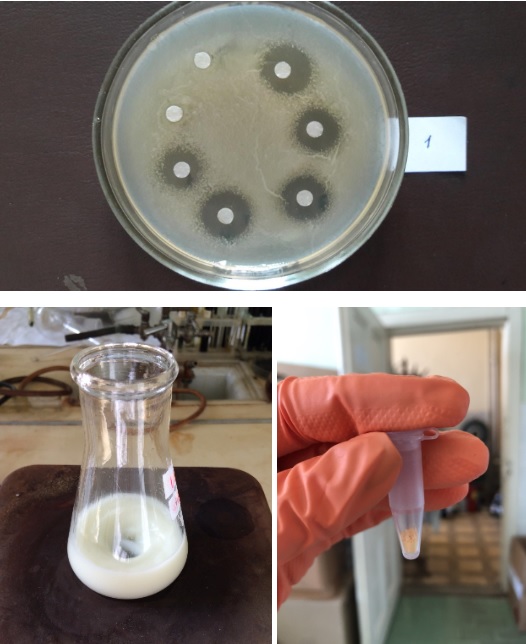
- The antimicrobial potential of new chalcogen-functionalised thiazolo[2,3-b]quinazolin-5-ones, mono- and trihalogenides of thiazolo[3,2-a]quinazolinium, and thiazino[3,2-a]quinazolinium tribromides obtained by electrophilic intramolecular heterocyclization was investigated and evaluated. High bactericidal and fungicidal activity against some gram-positive and gram-negative bacteria and fungi (E.coli, S.aureus, M.luteum, A.niger) was found. The structure-activity relationship was established, which shows the influence of the nature of the chalcogen, the type of substituents in the thiazoline and pyrimidine cycle on the biological activity of the studied thiazolo- and thiazinoroquinazolines. Angular halides of 4-methyl-5-oxo-1-((trihalogenotetanyl)methylidene)-8-(trifluoromethyl)-1,2,4,5-tetrahydrothiazolo[3,2-a]quinazolinium showed the highest bactericidal activity against Gram-negative Escherichia coli.
I see the challenges as insufficient funding for scientific research, in particular for young scientists, and limited resources that make it difficult to conduct research that could compete with world leaders in chemistry. The main challenge is the large-scale invasion of Ukraine by the Russian Federation. In the coming years, it is planned to further study the biological activity of condensed quinazoline and thienopyrimidine derivatives, as well as to test them for their growth regulatory activity in relation to crops. The proposed plant growth biostimulants can be used in agriculture in the future to improve the quality and yields of the most profitable crops.
Yuliia Zhukova, PhD, Senior Research Scientist, Scientific Advisor of the youth project DB-910M ‘Environmentally Friendly Ag - Leading Solid Electrolytes for the Latest Energy Storage Systems’:
- During 2023, research was carried out in several areas, in particular, in analytical chemistry - the behaviour of 4-hydroxystyrene dyes in solutions was studied. The thermochromic, solvatochromic, and halochromic properties of 4-hydroxystyrene chemosensors and their multifunctional application were investigated. The experiment was conducted as part of the National Scholarship Programme of the Slovak Republic in Presov.
In inorganic chemistry, in accordance with the scientific topics, research was carried out to develop a technology for obtaining high-quality ceramic materials based on polycrystalline and nanocrystalline samples of solid solutions of Ag7+x(P1-xGex)S6 composition, study the electrophysical properties of ceramics in the Ag7PS6-Ag8GeS6 system and determine the effect of dispersion on their properties. In 2023, 5 articles indexed in the Scopus and Web of Science databases were published, and the company participated in scientific conferences and seminars.
In the future, the company plans to continue to cooperate with both domestic and with foreign colleagues, participate in scientific competitions and scholarship programmes to support young scientists, and conduct research in the field of creating new chemosensor substances and functional materials with predetermined properties.
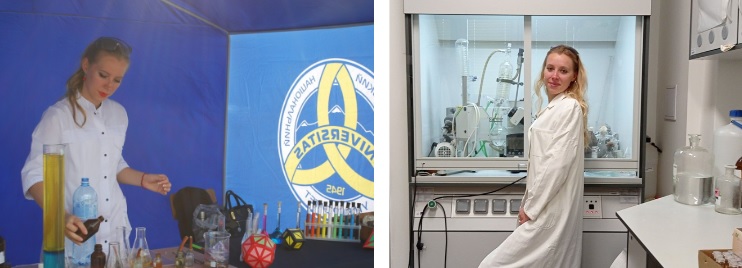
Vasyl SIDEI, Senior Research Scientist, Scientific Supervisor of the project DB-916 ‘Hybrid organic-inorganic perovskite materials based on quaternary heterocyclic cations for solar energy needs’:
- The developed methods for the preparation of organic precursors of hybrid organic-inorganic perovskite materials of the A2BX6 type, as well as the study of their properties, have significantly expanded the possibilities of controlling the physical parameters of such materials by modifying the organic cation based on triazole. Pilot samples of hybrid functional materials for the needs of solar energy and medicine were obtained. A large database of empirical data on the structural characteristics of the obtained materials (SEM, a set of spectral data) has been accumulated.


Information on the experimentally established and theoretically calculated structure of the properties of individual triazole-based A+ cations, as well as information on their influence on the electrical, optical and thermal characteristics of the final hybrid perovskite materials, for the first time, provide a reliable scientific basis for further research to build a basic predictive QSPR model for hybrid perovskite materials of the A2BX6 type, which in turn will allow planning the optimisation of resource-intensive processes for the development of new perovskite materials with predetermined properties.
Challenges to be overcome: the reduction in project funding severely limits the material support for research on the purchase of chemicals, solvents, and low-cost equipment; restrictions on full cooperation with Ukrainian scientific institutions during wartime limit the possibility of conducting experimental research on the use of the samples obtained.
Artem POGODIN, PhD, Senior Researcher, Associate Professor of Inorganic Chemistry, Scientific Adviser of the Youth Project DB-921M ‘Technological and Environmentally Safe Solid Electrolytes as Materials for Renewable Energy Sources’:
- In 2023, research aimed at obtaining and studying the properties of superionic conductors resulted in 10 articles indexed in the Scopus and Web of Science databases, 13 patents of Ukraine for inventions and utility models, and one monograph. The materials obtained as a result of the research have high values of ionic electrical conductivity, which exceeds or is commensurate with known analogues. At the same time, these materials, unlike commercial analogues, have high chemical stability and no degradation in wet conditions.
Despite the current limitations, we manage to maintain sufficient scientific cooperation with foreign colleagues to expand the range of research on functional materials.

In the near future, I plan to continue researching functional materials that are promising for practical use, improve the material and technical base necessary for further research, and expand the range of scientific contacts with foreign institutions.

RESEARCH AREA ‘SOCIAL SCIENCES’
Tetiana Karabin, Doctor of Law, Professor, Head of the Department of Administrative, Financial and Information Law:
- The project examines the Europeanisation of public law in Ukraine in three aspects: axiological, institutional and instrumental. The first aspect is determined by the fact that the formation of a common European administrative space is based on the assumption that EU member states share common values and beliefs, and therefore research and study of their impact on law is a major task for modern Ukraine. The second aspect is the institutional aspect, which is manifested in the fact that for our country, Europeanisation is not limited to EU law; the models for Europeanisation of public law and administrative activities are within the structures of the Council of Europe, in particular, SIGMA and others. The instrumental aspect of the study of the Europeanisation of public law concerns the mechanism of influence itself, which is not a bilateral process of mutual influence of European law and national law, as in the case of member states, and Ukraine, as a candidate country, does not influence the formation of generalised rules and norms of European law, but is only their recipient. In the course of the study, it should be borne in mind that at each stage of EU enlargement, different requirements were imposed on the candidate countries, including those related to the requirements for legislation and its application. In addition, the Europeanisation of public law in each member state has been and continues to be different. Therefore, the use of scientific developments of European scholars on these issues is useful, but their significance for our study is limited. More important is the more difficult task of researching and processing domestic empirical material and making appropriate generalisations for their implementation in practice. In the coming years, research in the relevant areas will continue, and their focus will be adjusted depending on the actual European integration processes in the country.


Yaroslav Lazur, Doctor of Law, Professor, Scientific Supervisor of the project DB-917 ‘Ensuring Human Rights in the Context of Emergency Legal Regimes: Institutional Capacity of the State and National Security’:
- In 2023, the monographs ‘Comparative legal research of cross-border cooperation of higher education institutions’ (J. Lazur, M. Mendzhul, Y. Fetko) and ‘Besonderes Verwaltungsrecht der Ukraine’ (B. Wieser, J. Lazur, T. Karabin, O. Bilash, et al.) were published. The first of them is devoted to topical issues of cross-border cooperation in the field of higher education, which is especially relevant given Ukraine's course towards full EU membership, while the second is intended to introduce Ukrainian law to the European reader and is published by Verlag Österreich GmbH in Vienna. In 2023, the scientific and practical project ‘Cross-border cooperation of higher education institutions: theoretical and legal framework’ was also completed, which was implemented with the support of the International Initiative Fund of the Conference of Rectors of the Danube Region, where I was the head of the working group. As a result, I was recognised for the fruitful and well-coordinated work of the entire Law Faculty and awarded the national recognition ‘Scientist of the Year 2023’ by the National Academy of Sciences of Ukraine.

In the context of the armed aggression of the Russian Federation against Ukraine, we are actively seeking new opportunities to raise funds to finance scientific activities, not least through participation in national and international research competitions.
Another challenge is the introduction of innovative technologies that should help in the search for new scientific opportunities.
In the near future, we plan to strengthen scientific cooperation with international partners: law faculties of Comenius University (Slovak Republic), Masaryk University (Czech Republic), Karl Franz University of Graz (Republic of Austria), University of Trnava (Slovak Republic) and Ukrainian partners. The plans for 2024-2025 also include the active implementation of tasks under the project of basic research, applied research and scientific and technical (experimental) developments ‘Ensuring human rights in the context of emergency legal regimes: institutional capacity of the state and national security’ (Supervisor: Y. Lazur).
Sibylla Buletsa, Doctor of Law, Professor, Head of the Department of Civil Law and Procedure, Supervisor of the project DB-918 "Rights to Virtual Assets and Personal Non-Property Rights in the Digital Age":

For better integration of Ukrainian legal science into the European research space, it is planned to participate in the EU research programmes, one of which is Horizon Europe. Within the framework of the research topic ‘Rights to Virtual Assets and Personal Non-Property Rights in the Age of Digitalisation’, the team of authors (Buletsa Sibyla Bohdanivna, Mendzhul Maria Vasylivna, Zaborovsky Viktor Viktorovych, Revutska Iryna Emilivna, Chepys Olesia Ivanivna, Anna Kalko) prepared a monograph ‘Legal Nature of Personal Non-Property Rights and Rights to Virtual Assets in the Context of Digitalisation’, which highlights the transformation of legal regulation of personal non-property rights in the context of the development of modern information technologies, the main results of the project are highlighted in 37 publications, including scientific articles and abstracts at international conferences. An international scientific and practical conference ‘Problems of Legal Regulation of Ensuring Personal Non-Property Rights and Rights to Virtual Assets in the Context of Digitalisation’ was also held online with colleagues from the University of Pisa (Pisa, Italy). The first and probably the most difficult challenge is that the topic under study is new in the legal world, which is developing rapidly under the influence of AI. There is not much material available, so it takes a lot of time to search for it, to research it in order to form a new opinion, different views on this phenomenon in science. In particular, this year we are planning to develop a modern scientific doctrine of legal regulation of personal non-property rights and rights to virtual assets in the context of digitalisation. Next year will be devoted to the development of conceptual provisions and proposals for improving legislation to improve the mechanism for ensuring personal non-property rights and rights to virtual assets in the context of digitalisation.

Ukraine is strong thanks to its intellectual resource. We sincerely congratulate those for whom science has become a mission in life. Your work is a symbol of spiritual freedom and personal development! We wish you innovative projects, bold achievements and discoveries! Thank you for your hard daily work and dedication, for your contribution to the good of the university. We believe in science and thank the Armed Forces of Ukraine, all the defenders of Ukraine and our future! Together we will overcome all difficulties. We will stand and win!
Prepared by: Kateryna Skubenych, Research Department of UzhNU
Hanna Feltsan, Information and Publishing Centre of UzhNU