“The Long Road to Peace”: Slovenian Reporter Presents Book on the War in Uzhhorod
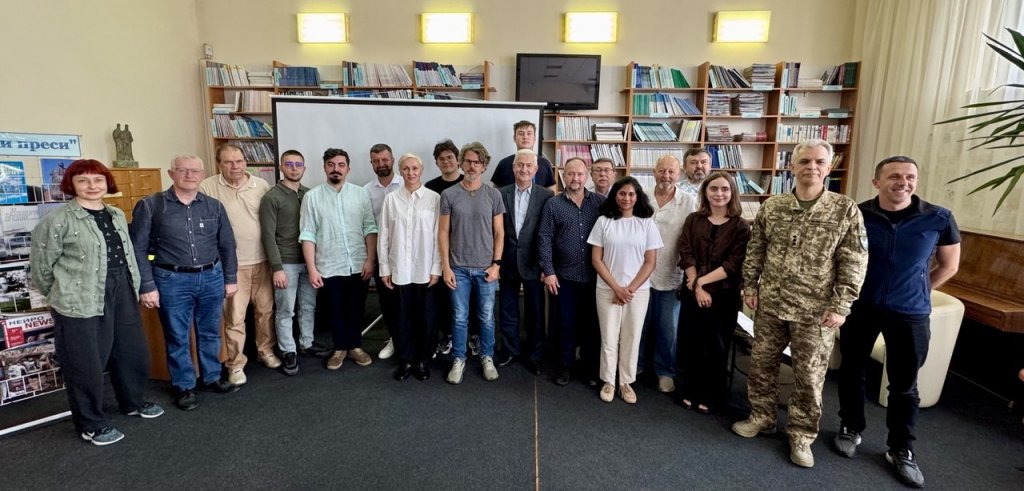
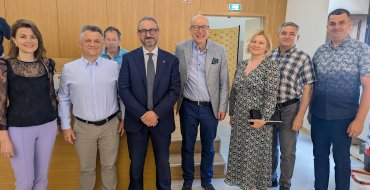
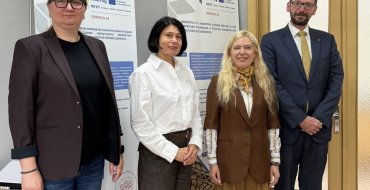
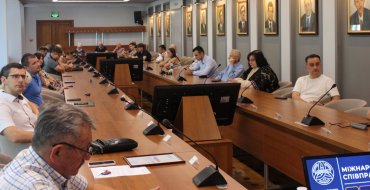
On June 2, the F. Potushnyak Zakarpattia Regional Scientific Universal Library hosted a presentation of the book “The Long Road to Peace” by Slovenian war correspondent Boštjan Videmshek. The event took place as part of the project “The Ukrainian Army — A Symbol of Valor,” organized by the Civil-Military Cooperation Group of the Transcarpathian Regional Military-Civilian Cooperation Center and the Joint Staff. The purpose of the meeting was to introduce Uzhhorod residents to the new book and to reflect on the continuity of war as a phenomenon: from the Carpathian trenches of World War I to modern positions in the Donetsk region.
Project coordinator Oleksandr Havrosh opened the event: “Today we have an event called ‘The Ukrainian Army — A Symbol of Valor.’ As part of it, there will be a presentation of the book by our guest today, a journalist and reporter who has come to us from Slovenia — Boštjan Videmshek.”
The author was introduced by Yurii Fatula, a renowned local historian, candidate of medical sciences, associate professor, and head of the NGO Center for Military-Historical Research “Memento bellum”—the man who facilitated Videmshek’s first visit to Uzhhorod. It was Fatula who, a year ago, organized meetings for him with wounded soldiers at the city hospital, where he heads the surgical department.
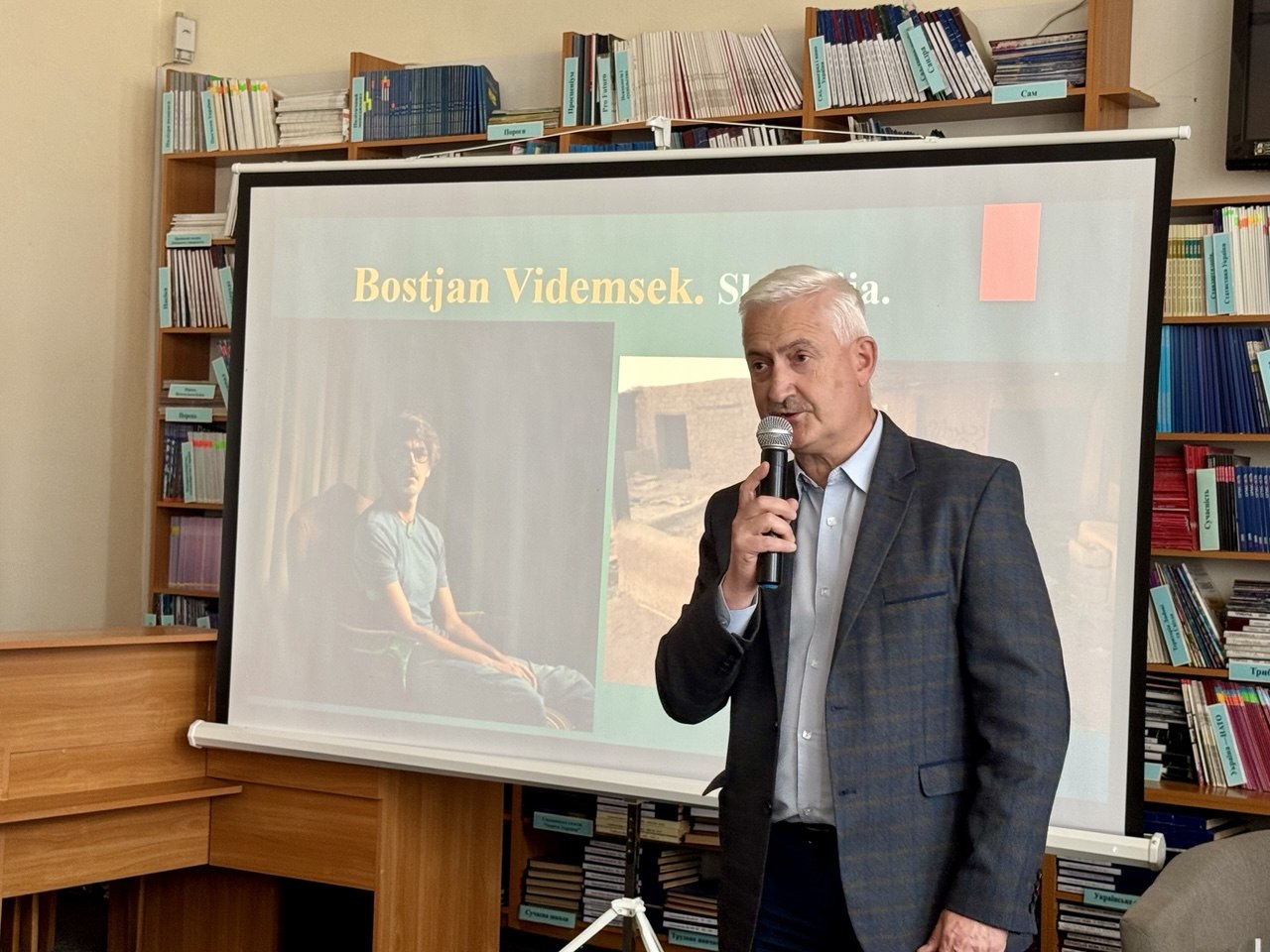
The story about the author turned out to be quite extensive. Fatula described Videmshek as a man who has experienced war from the inside: he has covered conflicts in Afghanistan, Iraq, Syria, Gaza, Kosovo, Libya, and Sudan—in fact, all the major armed conflicts of the 21st century. “He knows war just as well as the soldiers fighting in it,” Fatula emphasized. After his injury, Videmshek shifted his focus to the climate crisis, wrote a book about the last two northern white rhinos, and took up marathon running. But Russia’s full-scale invasion of Ukraine forced him to return to the topic of war.
Thus, the presentation centered on the story of how the book came to be. The impetus was a European project by the Slovenian “Path of Peace”—a 100-kilometer hiking trail along the former front lines of World War I, where about 60 museums are now located. The organizers asked Videmšek to write about it—and he agreed, but his vision grew to a somewhat larger scale than the initial discussion. The book spans five chapters: from the genocide in Srebrenica and Auschwitz to the events in Bosnia and eastern Ukraine. It unites them with the overarching idea that war does not end with the signing of documents. “His goal was to show that the legacy of war is direct. It is not halted by peace talks, nor does it end with some contract or document. War remains in families, in people’s hearts, and is passed down from generation to generation,” Fatula quoted the author as saying.

To bring the Slovenian audience closer to the Ukrainian war—which, at first glance, seems distant—Videmshek found an unexpected connection: it turns out that over 33,000 Slovenian soldiers died in Galicia and the Carpathians during World War I—more than all the partisans of World War II. Seventeen of them are buried right in Uzhhorod, on the site of the current train station.
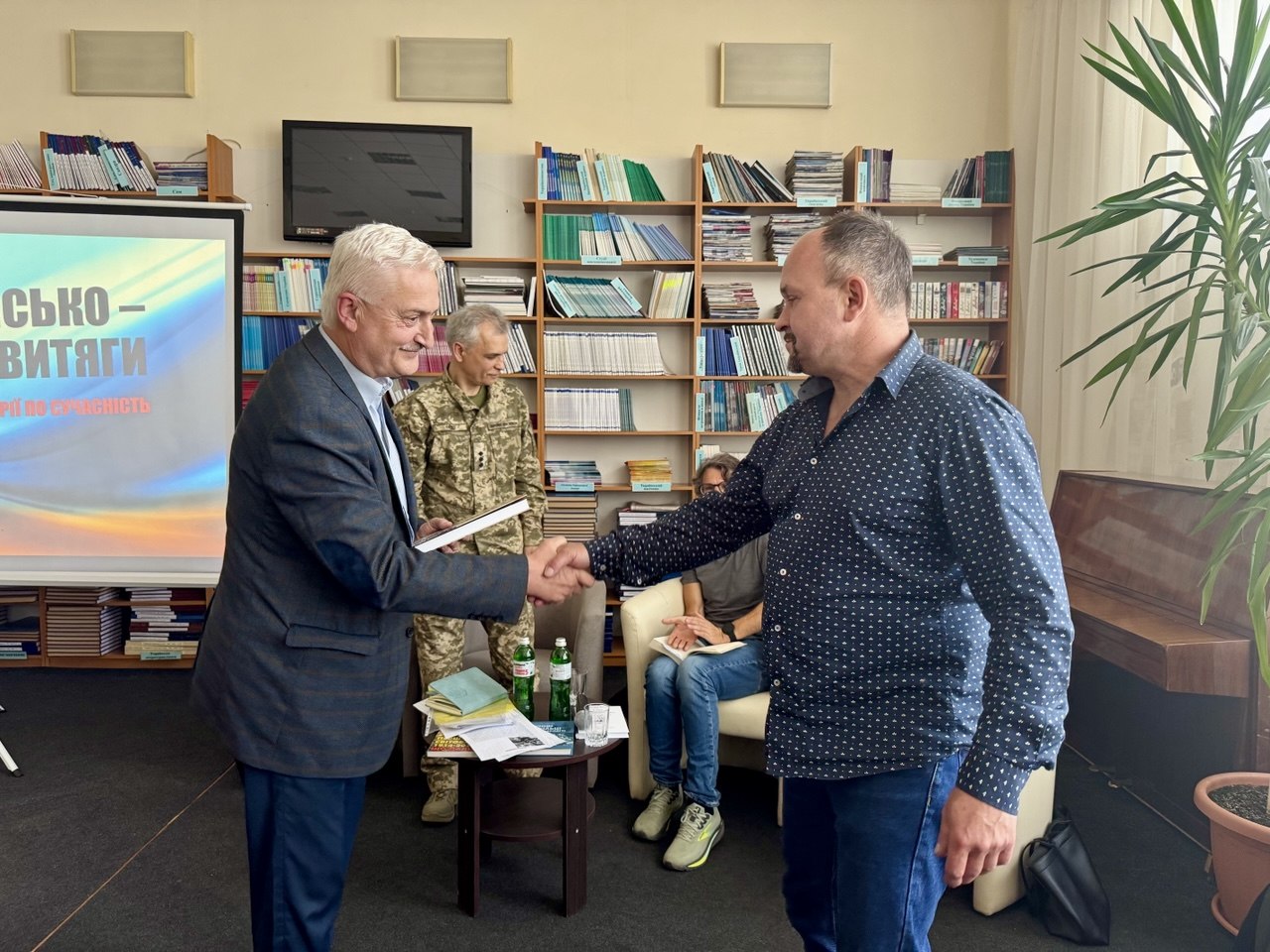
A special highlight of the evening was the appearance of one of the book’s main characters—55-year-old Lviv resident Andriy Romaniak. Fatula read an excerpt from *The Long Road to Peace*, which describes the soldier’s story, his injury that led to the amputation of his toes, and his arduous journey. Today, Andrii is back on his feet, without a cane, after four months of rehabilitation. As a sign of deep respect, Yurii Fatula presented Mr. Andrii with his own book about the 66th Ungvar Infantry Regiment, inscribed with the words: “As long as there are people like you, our Ukraine will live on.”
After that, Boshtyan Videmshek himself took the floor. He spoke through an interpreter and immediately acknowledged the awkwardness of his situation: “Here in Ukraine right now, I feel a bit foolish talking about war in a country that is at war.” But that is precisely why, he explained, he had no choice—to write or not to write. “In Europe, there are few writers or journalists who have actually experienced war. And for those who have actually seen it, it is their duty to write about it,” the journalist concluded.

Responding to a question about pro-Russian sentiments in parts of Slovenian society, Videmšek shared: “These people who support Russia were simply born into a comfort zone and are therefore easily susceptible to propaganda.”
At the end of the evening, Videmšek read an excerpt from the diary of a Slovenian soldier from World War I—in his native language. “The Long Road to Peace” is not merely a reporter’s account of a foreign war. It is an attempt by a man who has witnessed dozens of conflicts to prove that they are all links in a single chain, and that the memory of them is not an archival matter, but a living weapon against indifference.