Where hands remember the willow: an international workshop as a tool for preserving traditional crafts
The world is constantly changing, and with it, so are we and everything around us. As time flows on, years and generations pass, old habits disappear, and entire traditions fade away. Yet some things remain unchanged—things that time itself cannot erase. This is the code of a nation, living not in textbooks but within its people: in their crafts, clothing, ornaments, and in the ways they lived and worked from generation to generation.
The wooden shingles that once covered Carpathian houses and the willow branches that still remember the warmth of a craftsman's hands are part of this living heritage. It is a heritage we risk losing the moment the last person who remembers it falls silent.
The international project DRANICA.24 – "Promotion of Wooden Products as Elements of the Intangible Cultural Heritage of the Carpathian Euroregion. Technical Manual on Traditional Woodworking" (HUSKROUA/23/RS/2.2/021) was launched to preserve the traditional crafts that have shaped the cultural identity of the Carpathian border regions for centuries. Although its title refers to dranytsia—traditional wooden roofing shingles—the project's scope extends far beyond that, embracing the many crafts that have long defined this region. One of them is willow weaving.
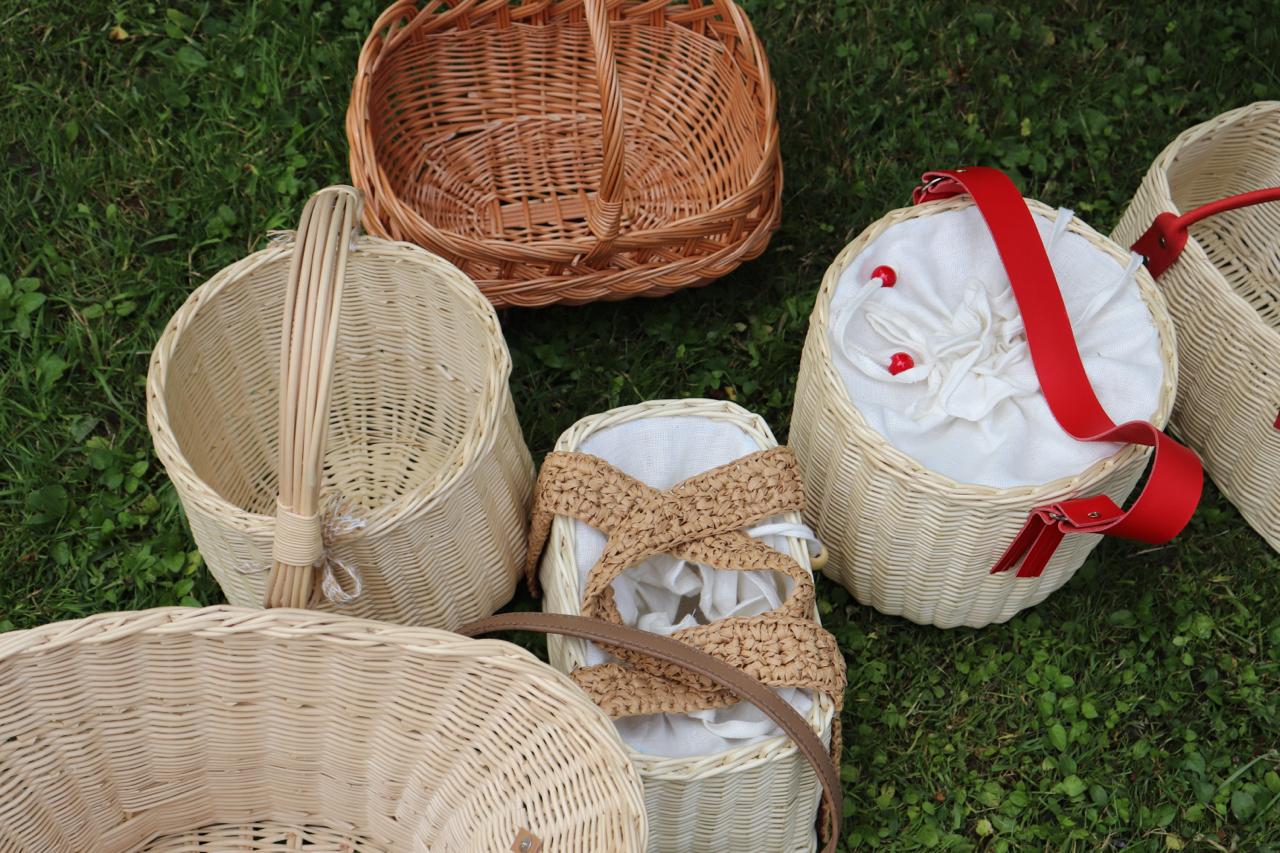
Willow weaving is one of humanity's oldest crafts. Long before people learned to work with wood or metal, they had already mastered the art of weaving. Archaeologists have found evidence of woven objects dating back to the Neolithic period, nearly ten thousand years ago. Flexible willow rods were used to create almost everything—from baskets and furniture to farm buildings and even house walls. In Ukraine, this craft took deep root, and in some places it remains not merely a memory of the past but a part of everyday life.
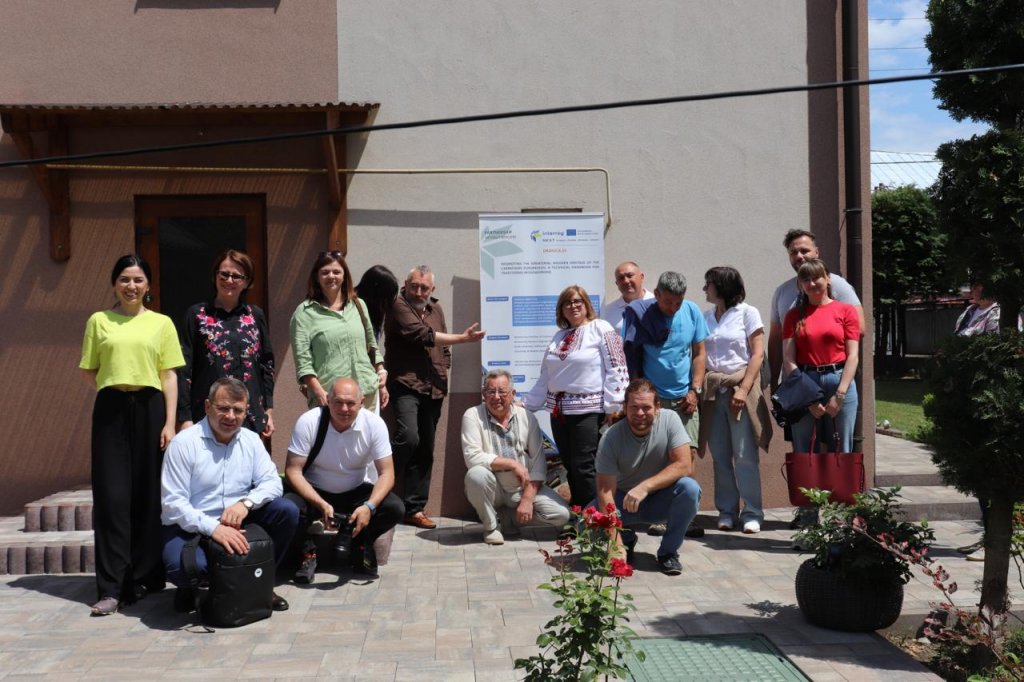
To learn more about it, we traveled to the well-known village of Iza in the Zakarpattia region. The village is famous for its willow weaving traditions, a skill possessed by nearly every resident. In the past, it was the villagers' primary source of income. Although people have since pursued other professions, the craft has never disappeared. As the people we interviewed put it: "No matter whether someone is a doctor, a teacher, or anything else, they come home from work and sit down to weave." It is easy to believe this. As we drove through the village, roadside shops lined the streets displaying woven goods, and nearly every yard featured at least one wicker creation.
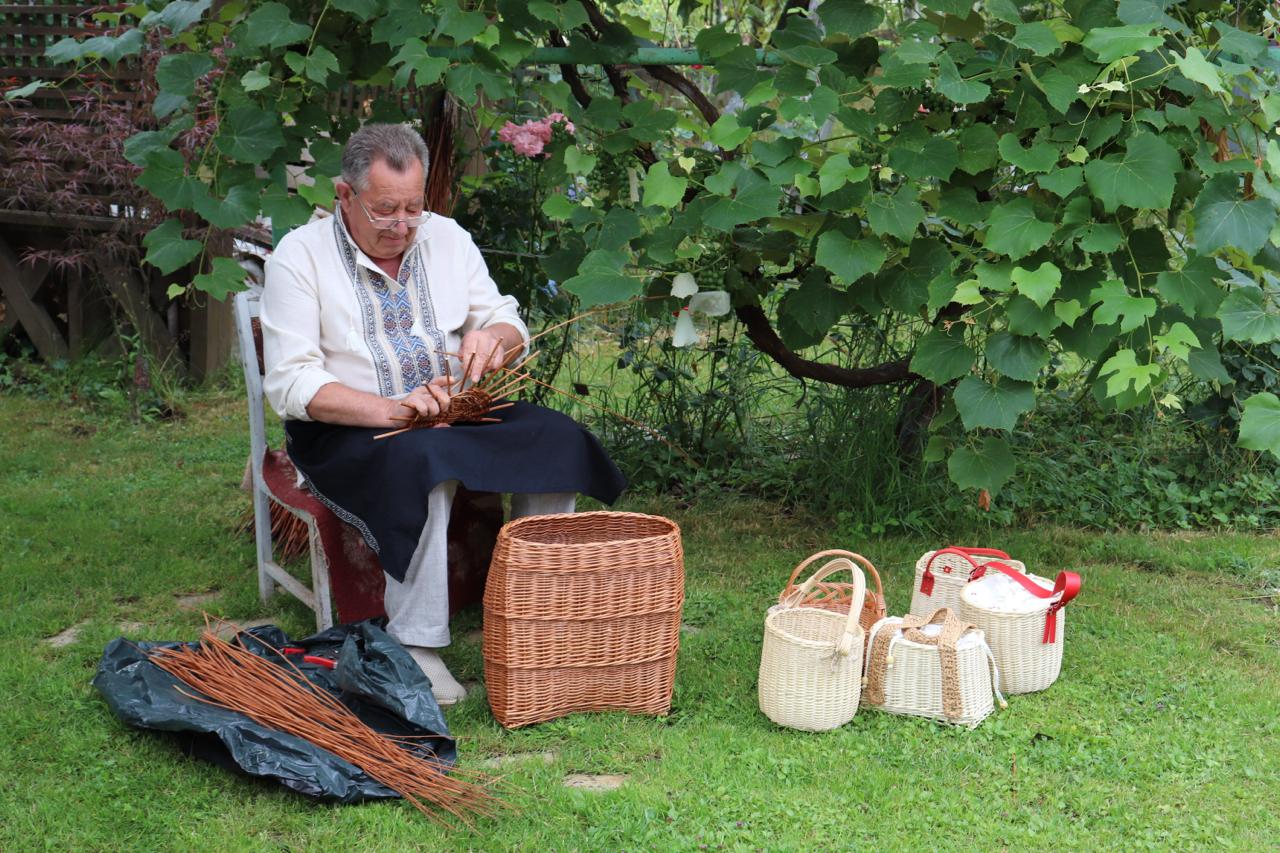
We visited Marina and Volodymyr Lenyo, a married couple who have been professionally engaged in willow weaving for almost forty years. They conducted a small workshop for us, demonstrating the entire production process and explaining how it works and why this craft remains so important today.
Creating a willow product consists of two stages. The first is preparing the raw material. Willow is harvested from autumn until early spring, before the leaves emerge. The straightest rods are selected and sorted according to their thickness and length.
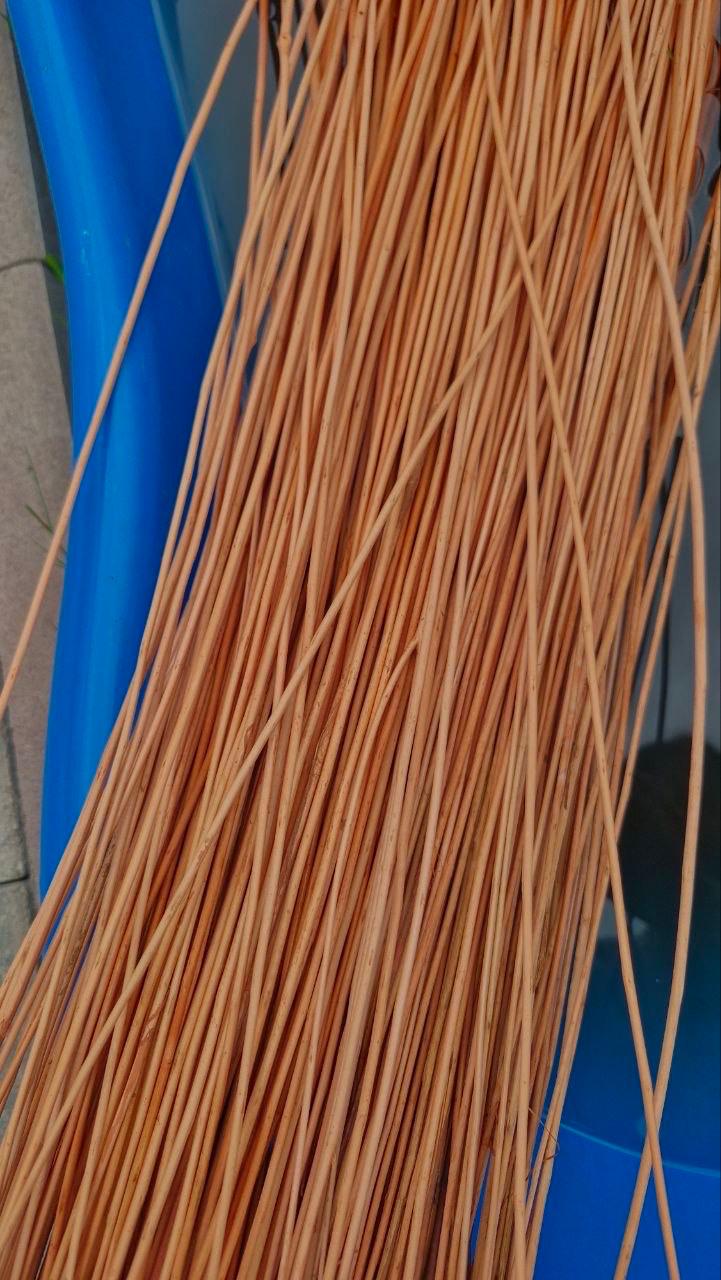
Processing willow is a traditional craft that requires careful adherence to established techniques. Freshly cut bundles are first boiled in large cauldrons for two and a half to three hours and then covered with a tarpaulin-like material to create a steaming effect. Afterwards, the rods are removed and "tempered" for one to two hours. This makes the bark easy to remove, allowing the rods to be stripped on special machines.
Depending on their characteristics, the rods are sorted for different purposes. Thick, sturdy willow is ideal for furniture, such as rocking chairs or bent structural frames, while thinner rods are used to make lightweight household items like baskets and woven handbags.
The couple also maintain their own willow plantation, although they usually prefer purchasing raw materials. "We know exactly how much we need and what it will be used for," they explain, so they see little point in spending extra time preparing it themselves. Besides, the willow they grow is somewhat coarser than the material they normally use. They often sell it to a neighboring craftsman who specializes in larger items such as furniture. Still, Marina assures us that if they were ever unable to order supplies, their own willow would work perfectly well for basket making.
Once the material is ready, the weaving can begin. Beforehand, the willow must be soaked to make it soft and flexible. Since weaving is the couple's livelihood, they prepare several basket bases in advance, allowing them to work more efficiently. Every basket begins with its base.
"Without a good foundation, there can be no good house," Volodymyr Lenyo remarks. In their workshop, he is usually the one responsible for creating this "foundation."
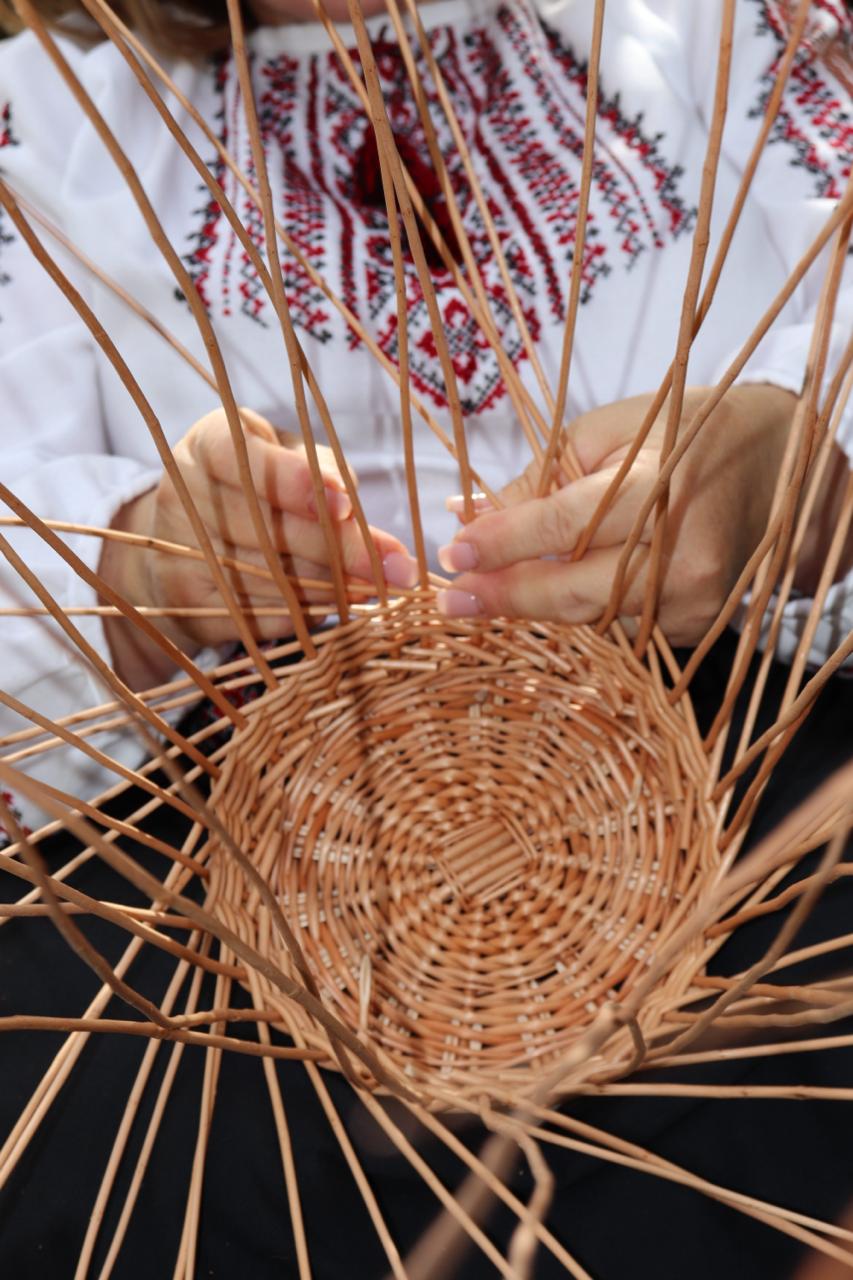
The process looks like this. A traditional round basket base begins with a cross-shaped framework. Four to six thick rods are split in the middle, and an equal number of whole rods are inserted through the openings. These are then woven together in pairs around the center using a two-rod "rope weave," securing the foundation. Next, the spokes are spread evenly like a fan, and the weaving continues with a single rod, wrapping each spoke individually until the desired diameter is reached.
Once the base has reached the required size, the craftsmen carefully trim the working ends and bend the upright stakes upward, forming the transition to the basket walls. Throughout the process, they regularly spray the willow with water to keep it supple. Long, flexible rods are inserted one by one between the uprights. Each new rod is always introduced with its thicker end facing inward so that the angled cut remains hidden inside the basket. The weaving then continues in the traditional manner, passing around each upright in sequence—inside, outside, and inside again.
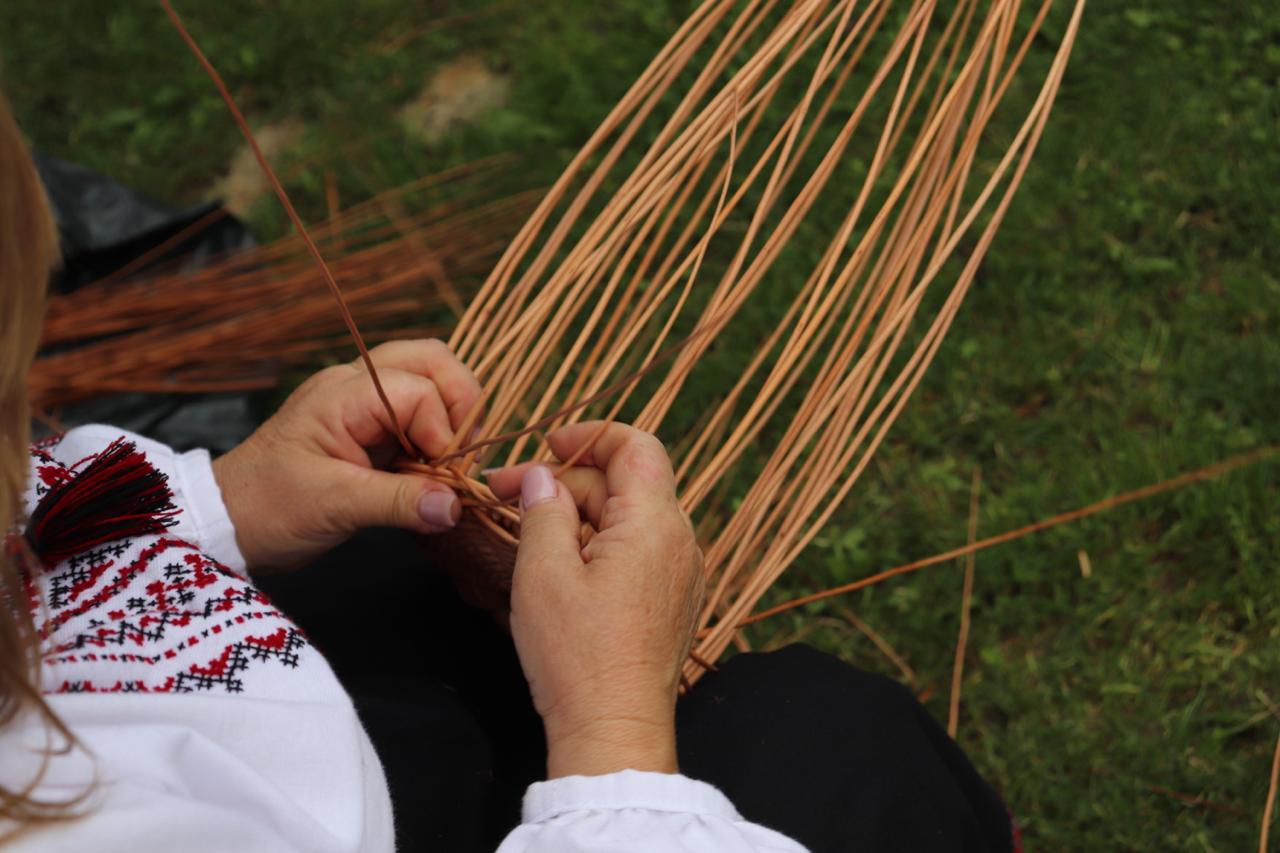
Marina handled the process effortlessly. "Her hands remember," as the saying goes. Even while talking to us, her nimble fingers never stopped moving, skillfully and confidently weaving the willow rods together.
At the guests' request, the couple also demonstrated the famous openwork weaving technique. This method requires special tools that each craftsman makes for themselves, usually in several different sizes.
"We simply call it an openwork block," Volodymyr says.
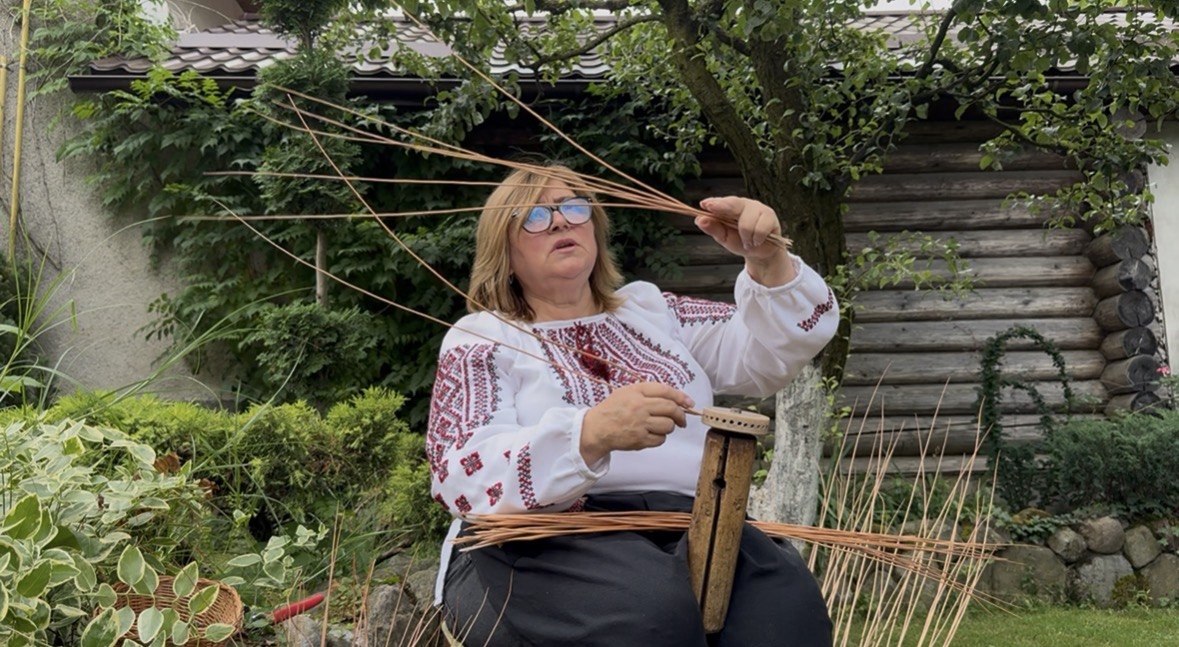
The block ensures that every openwork section is the same height and keeps the uprights perfectly aligned, guaranteeing the finished piece has flawless geometry.
Marina then explained the technique itself. The block is held firmly between the knees with its rounded side facing upward. Along its edge are evenly spaced holes. The thicker end of each willow rod is cut at an angle and inserted into one of the holes before being secured with a screw inside the block. The weaving itself follows the familiar pattern: the working rod wraps around each upright and is pressed tightly downward, constantly tightened to ensure a dense, even weave.
While demonstrating, Marina also spoke about the place of willow weaving in today's world. Many well-known Ukrainian designers commission work from the couple. This comes as no surprise: society increasingly values environmentally friendly products and sustainable everyday objects, and the craft is enjoying a revival.
The appeal lies not only in the finished products but also in the process itself. Willow weaving is a form of meditation. It helps people disconnect from distracting thoughts and relax. Marina runs her own weaving courses and currently teaches seventeen students. She believes the craft can be mastered in six to twelve months—some people learn quickly, while others need more time. As part of the workshop, the couple invited us to try weaving ourselves, and we happily accepted the challenge.
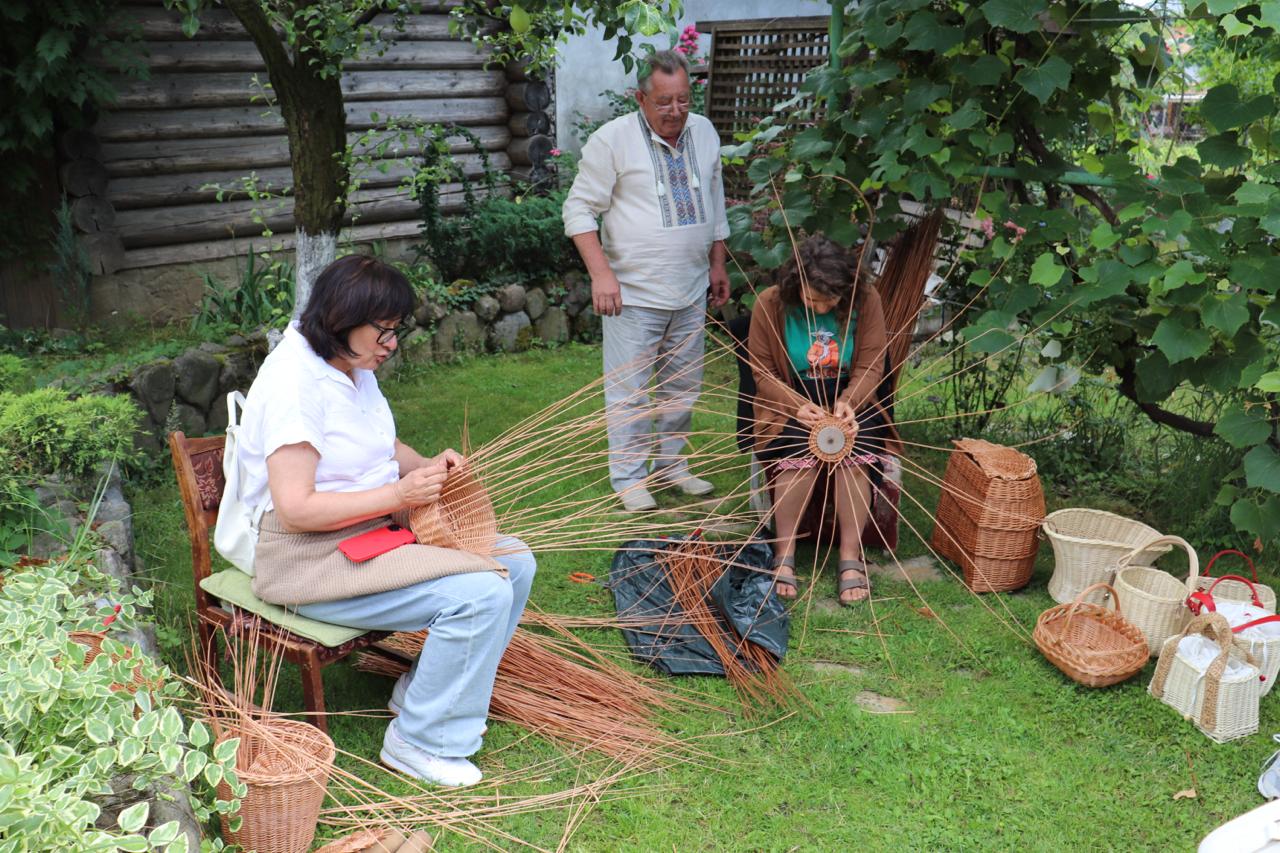
At the end of our visit, we stopped by the local museum and several craft shops, where each of us purchased a small keepsake—a tangible piece of this remarkable tradition.
Valeriia Melnyk
Information and Publishing Center