UzhNU Presents Opportunities for Study and Internships in the U.S. Through the Fulbright Program

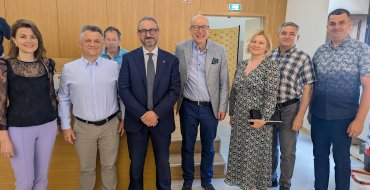
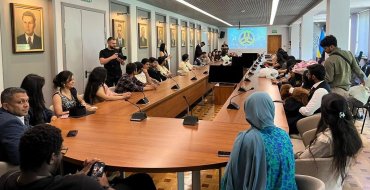
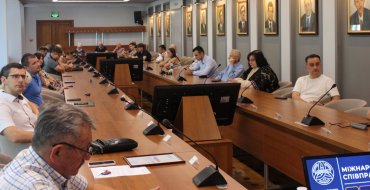
Undergraduate and graduate students, faculty members, researchers, and scholars have the opportunity to win a grant to study in the U.S. through the Fulbright Program—the most prestigious American international education program. On April 20, representatives from the Institute of International Education spoke to UzhNU students about academic opportunities in the reading room of the UzhNU Scientific Library.
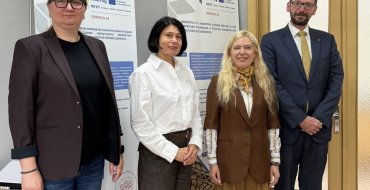
Inna Barish, Deputy Director of the Kyiv office of the Institute of International Education and Program Coordinator, along with Program Coordinator Mariia Kravchenko, discussed opportunities for study, internships, and research, as well as application requirements, the submission process, and the competitive selection procedure.
Fulbright programs provide grants for study in the U.S., covering tuition at a university or research expenses, round-trip airfare, visa support for grantees and (in some cases) family members, a monthly stipend for living expenses, additional funds for professional literature and textbooks, and health insurance.
The programs offer opportunities to students, faculty, and researchers: To become a participant, you need to do some preparatory work: identify a topic, research U.S. institutions to ensure their programs align with your goals, prepare letters of recommendation, and write a personal statement. It’s not always possible to win a grant on the first try, but that doesn’t mean the door is closed or that the programs are only for the select few. Program representatives shared stories of participants who managed to join the program on their very first application, as well as those who applied for years.
- Master’s degree programs at U.S. universities for upper-division students and graduates of higher education institutions in the humanities, social sciences, exact sciences, engineering, and natural sciences;
- internships in Ukrainian language instruction (assisting American instructors) at universities/colleges;
- conducting research at U.S. universities;
- teaching courses, participating in the development of curricula, and giving guest lectures.
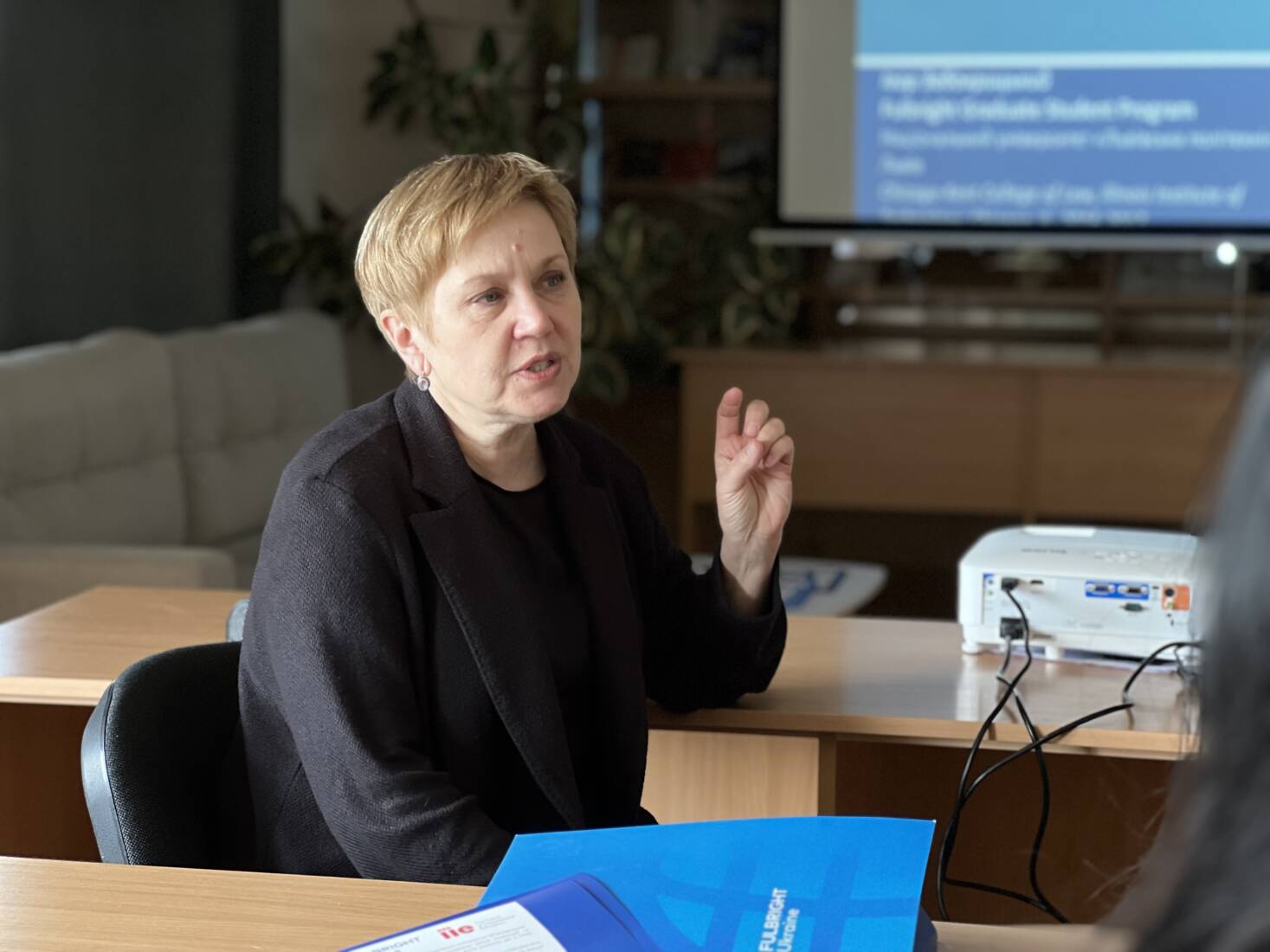
In particular, Inna Barish says: “The more detailed your plan and the more specific your application, the higher your chances of receiving a grant. If you wrote very little, very vaguely, or very briefly about yourself in your essay, you may not be recommended for the next stage of the competition. That’s why it’s important to take the preparation of your documents seriously. It’s advisable to emphasize why your project is important to Americans and why it’s important to Ukraine, since the visa requires you to return to Ukraine. We’d like you to come back and apply the experience you’ve gained here.”
In the context of the war, a logical question arises: what about traveling abroad under the program for men? The official position is as follows: “The Fulbright Program in Ukraine operates exclusively within the legal framework of Ukraine, including regarding the rules for crossing the state border by men subject to military service. Winning a Fulbright competition does not constitute grounds for traveling abroad. Only those finalists who have legitimate grounds for crossing the border (family circumstances, health conditions, etc.) may use their grant in the U.S. In the absence of such grounds, the grants of male finalists subject to military service are carried over to the next academic year.”

There is good news for linguists, as, according to Fulbright representatives in Ukraine, with the full-scale war, more and more American universities are ready to accept teachers of Ukrainian language and literature. Currently, there are already 7 universities ready to accept assistants into their institutions and offer training.
The keys to a successful application, according to Inna Barish and Mariia Kravchenko: Mariia Kravchenko emphasizes: “We invite you to read the Fulbright newsletters on our website, where you can learn about successful applications and contact our alumni.”
- the topic should be related to your previous experience,
- develop a detailed research plan taking into account the American context,
- apply again if you weren’t successful the first time,
- carefully proofread your motivation essay, ask previous Program participants to review it,
- describe your topic and idea as clearly as possible so that it is understandable and leaves no questions unanswered.
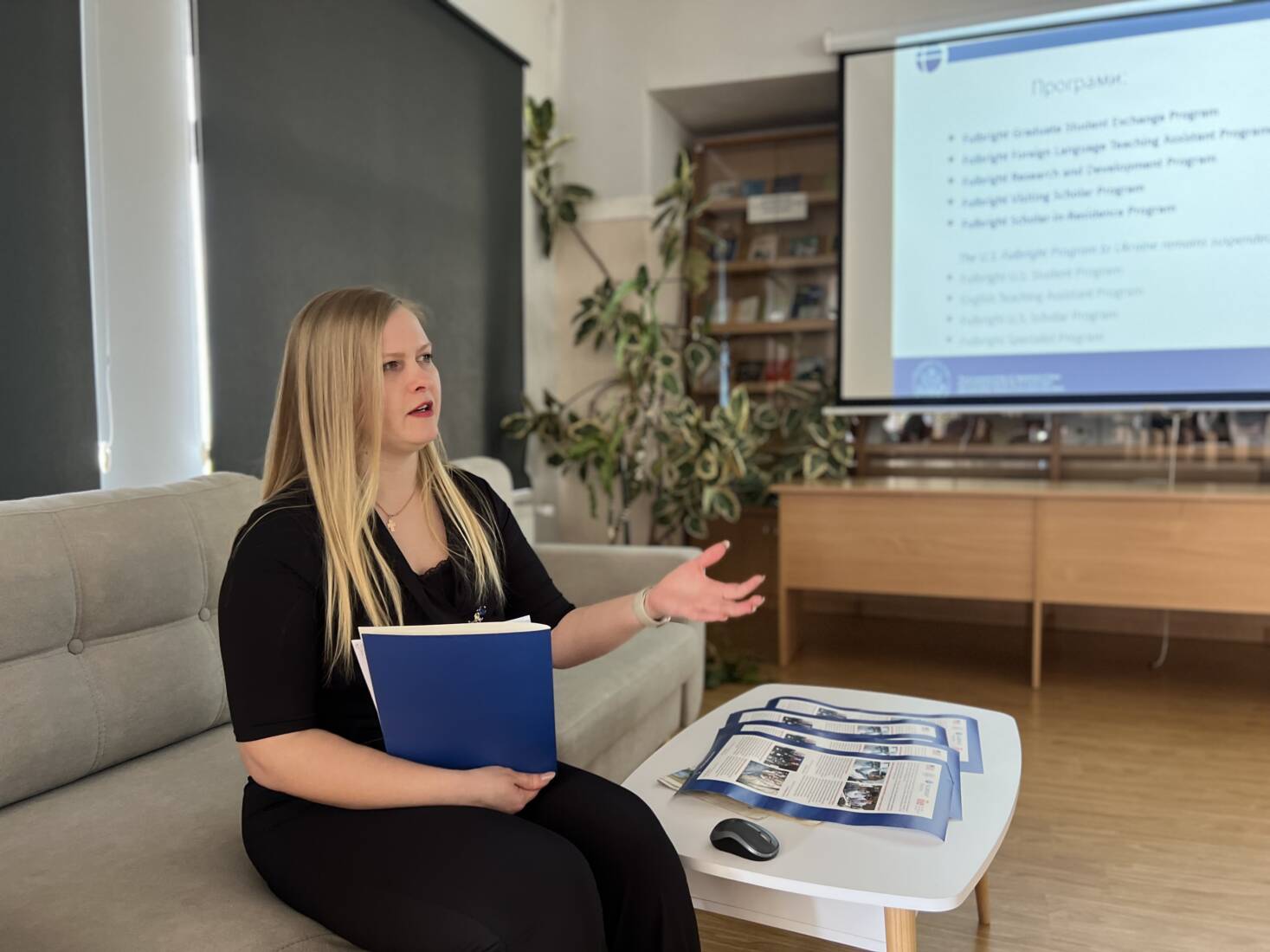
The Fulbright community, say Ms. Inna and Ms. Mariia, is as open and friendly as possible; Program alumni receive support even after returning home and meet at joint events to exchange thoughts and ideas.
You can learn more about the programs on the website Fulbright Program in Ukraine.