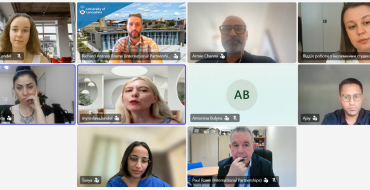
Problems of women in science were discussed during the round table ‘Challenges and opportunities for women scientists in modern conditions’
.jpeg "Problems of women in science were discussed during the round table ‘Challenges and opportunities for women scientists in modern conditions’")
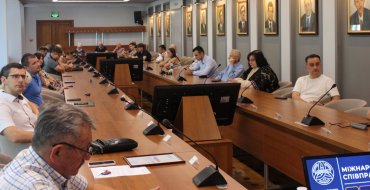
On Wednesday, 12 February, the International Day of Women and Girls in Science was marked by a roundtable discussion on Challenges and Opportunities for Women Scientists in the Modern World. The event was aimed at drawing attention to the importance of the role of women in the scientific field, discussing the opportunities and challenges facing scientists in times of war. The International Day for Women and Girls in Science is celebrated on 11 February as a UN international day and is supported by UNESCO and the UN Special Rapporteur on Gender Equality and the Empowerment of Women. It aims to promote full access to science for women and girls.


Vice-rector Myroslava Lendiel noted that such events dedicated to the International Day of Women and Girls in Science will become annual and will become another good tradition of scientific life at UzhNU: ‘All the women who are here today are scientists, and they started their journey back in their student days when they wrote their bachelor's and master's theses and continued to work on their research as postgraduate students, candidates of science, doctors of science... Today we are here to discuss what excites us, worries us, and at the same time brings us pleasure. I am glad that there is such a day, because women in science face more challenges than men. In our society, it is customary for women to be responsible for private life - caring for children and elderly family members, and running a household. At the same time, women in education and science are successful and achieve significant heights, so this holiday is inspiring for us.’

‘Our predecessors, the scientists of the past centuries, have done a lot to help us fulfil ourselves. It's hard to imagine the difficulties and sometimes contempt they had to face. This journey began a long time ago. However, even in the 21st century, a woman may face the problem of not being perceived on an equal footing with a man. This often happens in scientific fields, where men still outnumber women, and these fields are traditionally considered ‘masculine’. Over the past centuries, women have invented many inventions that we use, but we don't even know that they were invented by women - Wi-Fi, periscope, car wipers, washing machine... Women have changed the world, and each of us, despite various difficulties, is also changing the world by our example and scientific activities,’ said Kateryna Skubenych, Head of the Research Department.
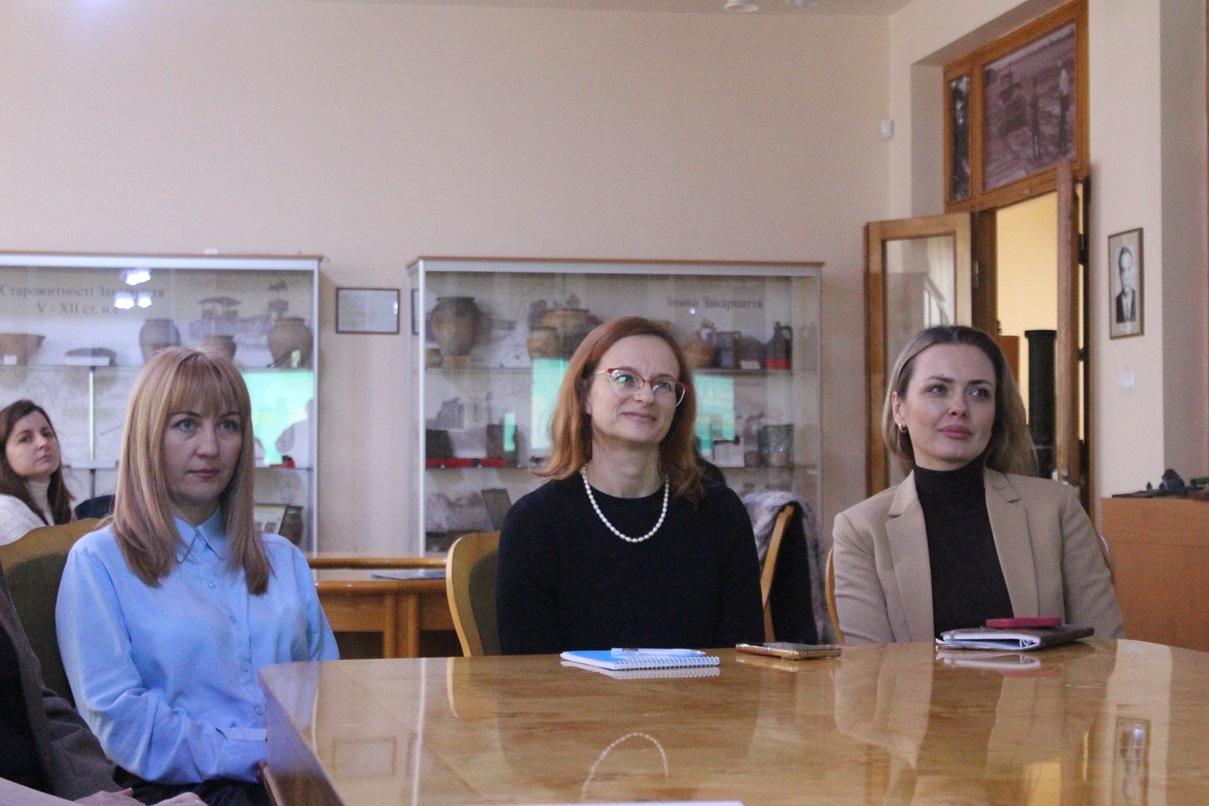
Marianna Kolodii, Head of the Gender Education Centre at UzhNU, outlined the history and traditions of the day, as well as the main aspects of the representation and activities of women and girls in science: ‘The top five EU countries with the largest number of women scientists are Lithuania, Bulgaria, Latvia, Portugal, and Denmark. Instead, the UAE, Iran, Uzbekistan, Japan, Cameroon, and Saudi Arabia are the countries with the lowest representation of women in science. Women make up about 46% of researchers in Ukrainian scientific institutions, but only 20% of them hold senior positions in higher education institutions. Globally, 30% of scientific publications and 13% of patents for inventions belong to women. It is predicted that gender equality in inventions will be achieved in 2070. Globally, 35% of students studying science, technology, engineering and mathematics are girls. On Wikipedia, 15% of texts about scientists are dedicated to female researchers.’

Marianna Kolodii also presented the results of a survey that UzhNU scientists were invited to take on the eve of the International Day of Women and Girls in Science. The purpose of the survey was to investigate the peculiarities of scientific activities of women and girls in Ukraine during the war, to explore their main needs, opportunities and challenges for self-realisation in the field of science.
For example, the main challenges and barriers for women and girls in science are most often mentioned by UzhNU scientists: low salaries in science, women's responsibility for family care work, and the need for significant financial resources for research.
At the end of the meeting, the participants had the opportunity to talk about their own path in science and highlight the challenges they faced in building a scientific career.