Meeting with a delegation from the German city of Karlsruhe
.JPG "Meeting with a delegation from the German city of Karlsruhe")
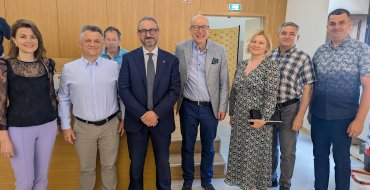
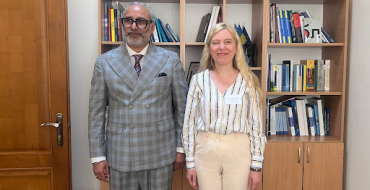
On May 25, 2026, a meeting was held with representatives of the interdisciplinary German-Ukrainian consortium RaumChance für Ukraine, attended by the mayor of Karlsruhe, Germany (2016–2025), German government advisor Martin Lenz, the architect of the concept that made it possible to accommodate over 5,000 Ukrainian displaced persons in high-quality conditions for the long term.
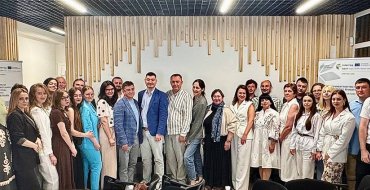
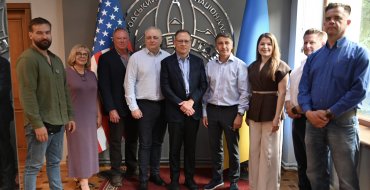
The meeting was attended by Acting Rector of Uzhhorod University Volodymyr Smolanka, Chair of the UzhNU Reorganization Commission, Vice Rector Oleksandr Rohach, Vice Rector for International Relations at UzhNU Myroslava Lendiel, Chair of the Scientific Council of the Institute of Public Administration and Regional Development, Dean of the Faculty of International Economic Relations Mykola Palinchak, and Director of the Institute Volodymyr Prykhodko. The meeting was also attended by the Head of the Transcarpathian Regional State Administration, Myroslav Biletskyi.
The discussion focused on applying the successful experience of the German city of Karlsruhe to Transcarpathia, where a significant number of internally displaced persons currently reside, most of whom are elderly and unable to secure decent housing on their own. That is why, in cooperation with European programs and funds, the organization intends to implement the “Transcarpathia Housing Region” initiative. Transcarpathia and Uzhhorod University will continue to receive thousands of people from frontline regions and settle them in temporary housing. Therefore, it is extremely important to implement projects that will help provide permanent housing for Ukrainians who have lost their homes.
To address this issue, it is necessary to unite the efforts of researchers, experts, German partners, and regional authorities; adapt the concept that has been successfully implemented in the city of Karlsruhe to the realities of the region; and implement it by attracting European investments. The commitment to cooperate was formalized in a corresponding trilateral protocol.
During the meeting, a Memorandum of Strategic Partnership was signed between the university, its institutes, faculties, and other participants in the initiative.