The Department of Solid-State Electronics and Information Security Hosted Lectures by Mike Richardson
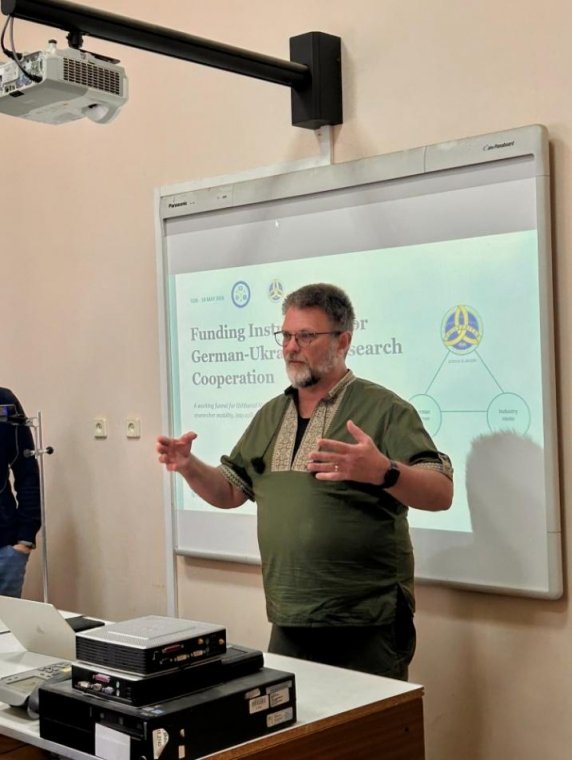
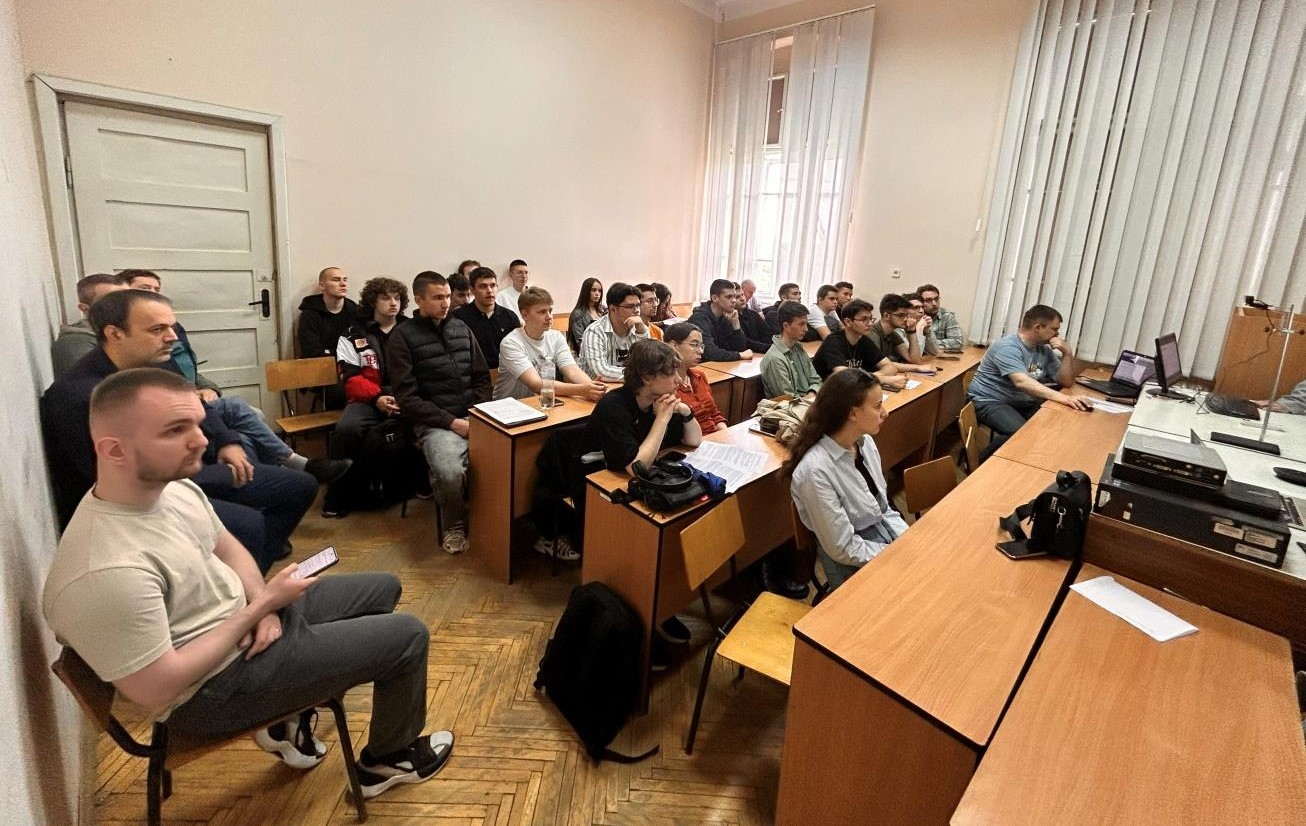
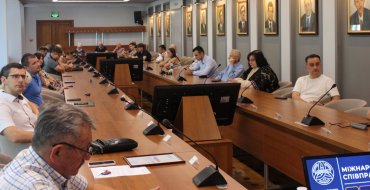
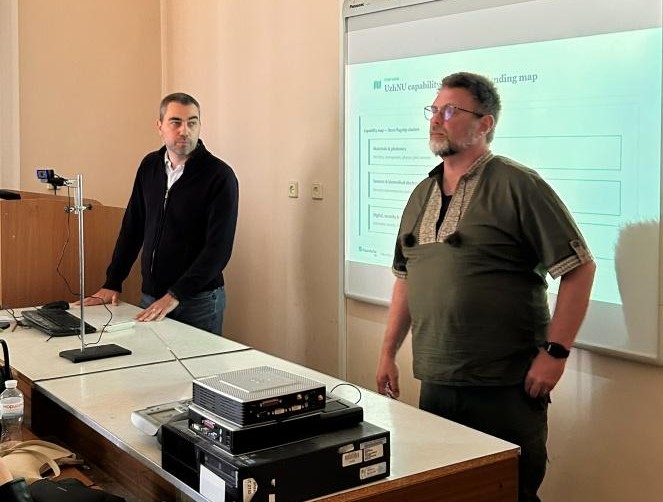
On May 18 and 19, the Department of Solid-State Electronics and Information Security at the Faculty of Physics of Uzhhorod National University hosted two guest lectures by Mike Richardson, dedicated to issues of international scientific cooperation, securing funding for research, and technology transfer. The events were attended by undergraduate and graduate students, as well as doctoral candidates and faculty members of the department.
Mike Richardson is an international expert from the United States who actively collaborates with Ukrainian scientific, educational, and innovation organizations. He is an expert in the fields of innovative ecosystem development, high-tech industry, photonics, semiconductor technologies, international scientific and technical cooperation, and cluster development. As part of his collaboration with the Ukrainian Cluster Alliance, Mike Richardson participates in projects aimed at developing Ukraine’s scientific and technological potential, expanding international partnerships, and integrating Ukrainian institutions into European and global cooperation programs.
During the first lecture, held on May 18, Mike Richardson presented a report on funding opportunities for Ukrainian-German scientific cooperation. Students learned about the main tools for supporting international scientific projects, academic mobility programs, and the prospects for developing partnerships between Ukrainian and German scientific institutions. Particular attention was paid to the practical aspects of identifying grant opportunities and establishing successful international research consortia.
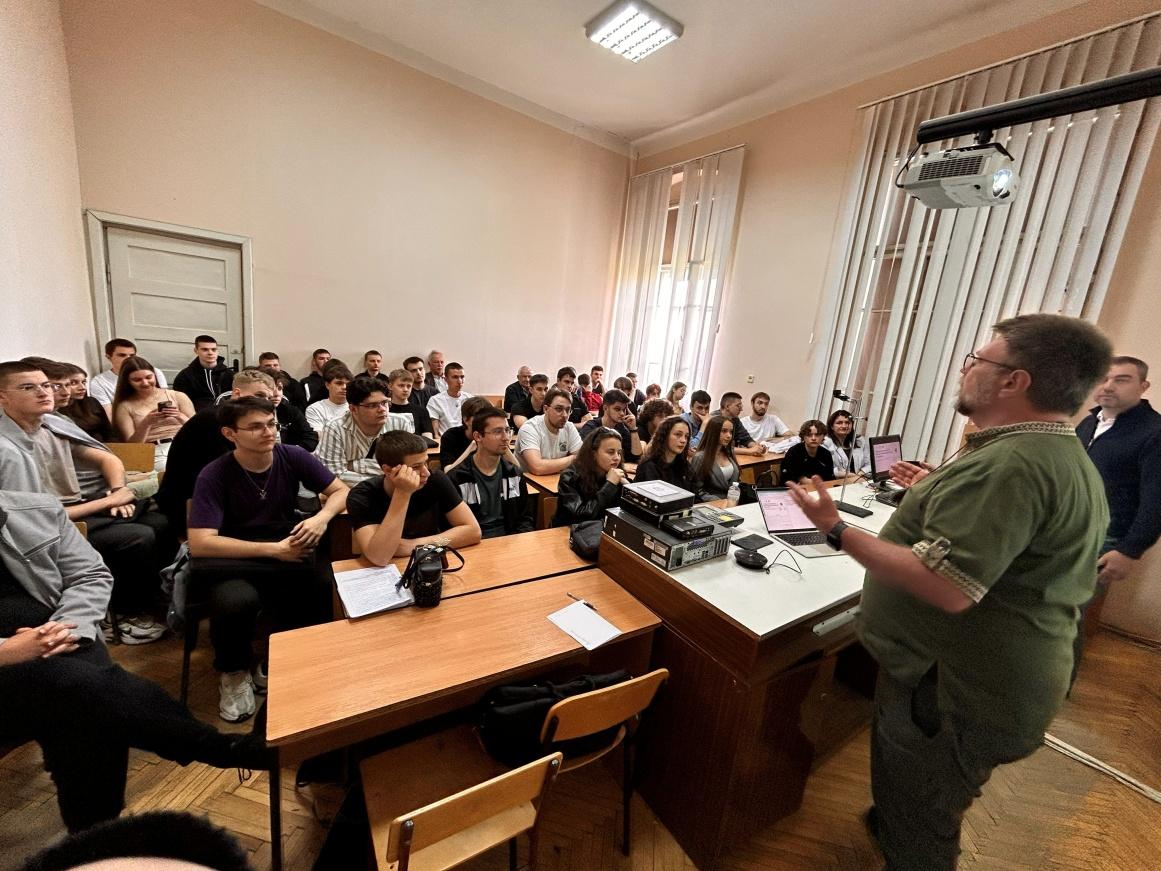
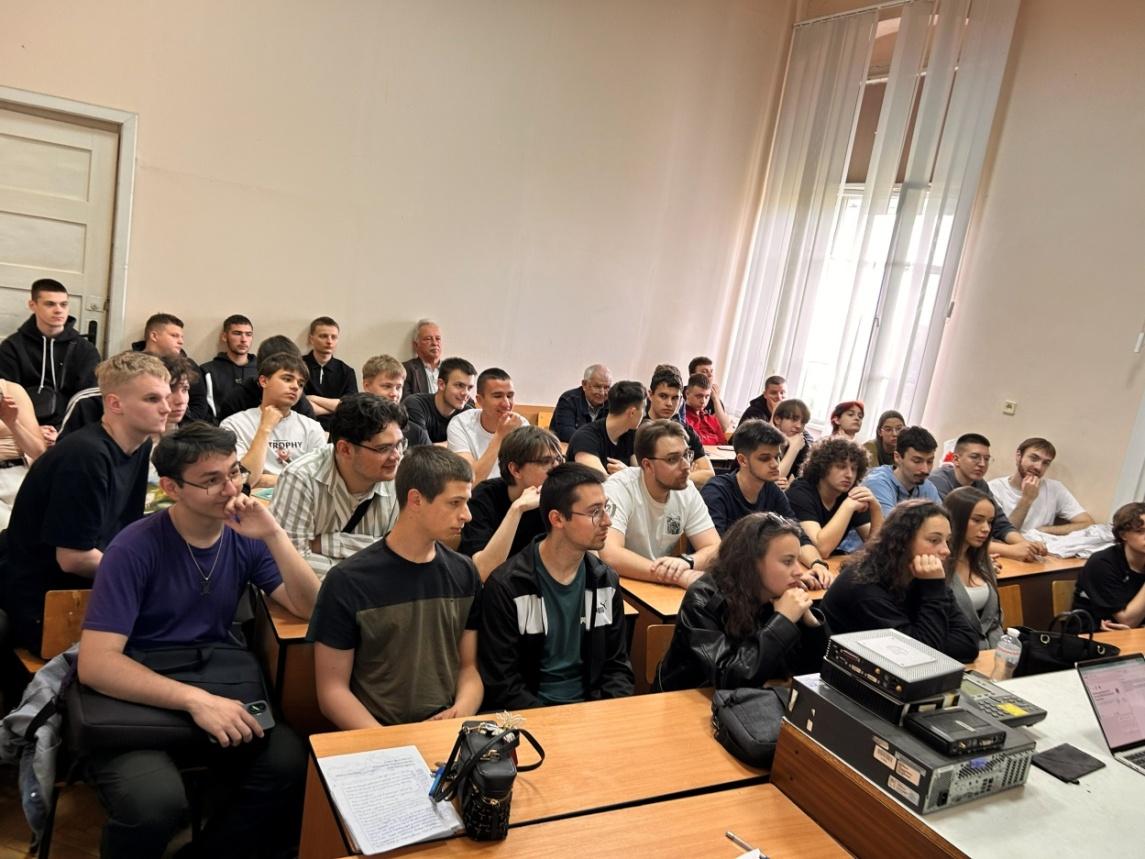
The second lecture, held on May 19, focused on technology transfer between research institutions and industry. Using the example of the Fraunhofer IZM Institute for Reliability and Microintegration (Germany), the lecturer demonstrated the path from a scientific idea to its practical implementation in production. Participants learned about the specifics of commercializing scientific developments, creating prototypes, collaboration between scientists and business representatives, as well as the role of innovation in the development of modern technologies.The lectures generated significant interest among students and provided an excellent opportunity to learn about European practices in organizing scientific research, international collaboration, and the implementation of innovative solutions. Hosting such events contributes to enhancing students’ professional training and expanding their opportunities to participate in international scientific projects.