Slovenian writer, journalist and war correspondent Boštjan Videmšek talked about peace and war in UzhNU


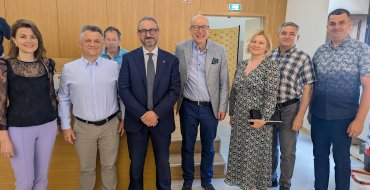
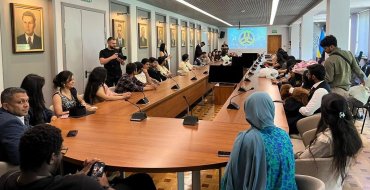
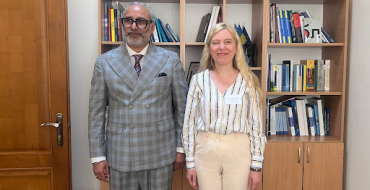
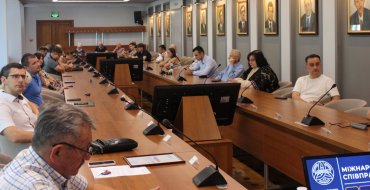
On Friday, 31 January, a meeting with the Slovenian media personality Boštjan Videmšek was held in the premises of the E. Balahuri Archaeological Museum. He is known for his works covering socially important topics such as military conflicts and the environment. The event was organised jointly by the Information and Publishing Centre of UzhNU and the NGO Centre for Military and Historical Research ‘Memento bellum’. The guest's visit took place as part of a European project to study the historical heritage of the First World War in Europe called ‘From the Alps to the Carpathians’.
Boštjan Videmšek has been in journalism for about 35 years. The last 25 of them have been devoted to covering large-scale military conflicts in Afghanistan, Iraq, Syria, Darfur, Gaza, Somalia, DR Congo, Libya, Ukraine and Kosovo. For the past six years, he has been searching for solutions to global climate problems. His writings have been published in leading global media outlets such as The New York Times, CNN, BBC, Politico, Der Spiegel, Forbes, Le Figaro, Wired, National Geographic, Middle East Eye and others. Mr. Boshtian is also a well-known writer, having authored 8 books on contemporary armed conflicts, migration, climate and one joint work with his wife on the extinction of the northern white rhino.
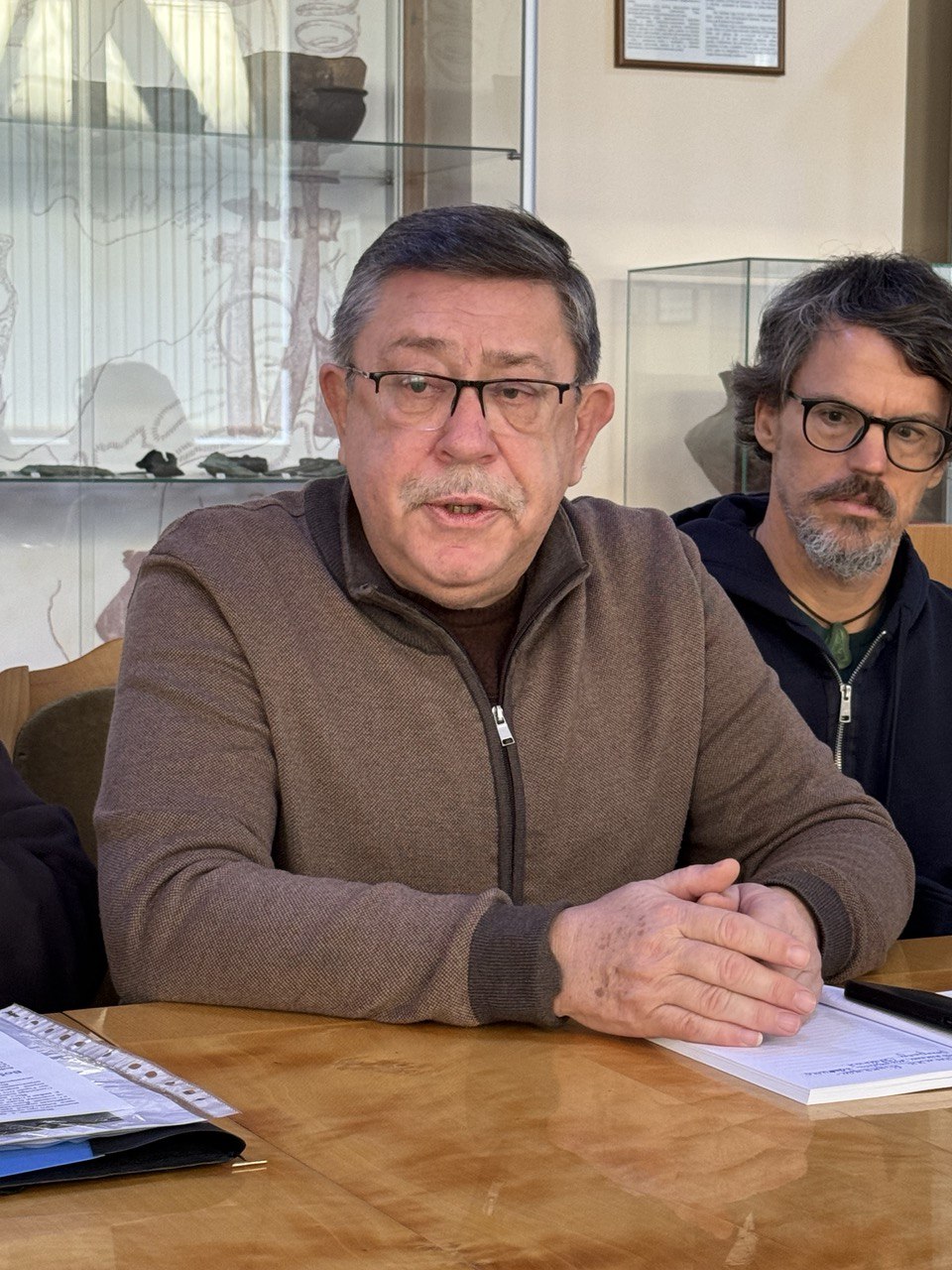
The meeting was moderated by Vasyl Ilnytskyi, Director of the Information and Publishing Centre of UzhNU. In addition to the traditional words of greeting, the event began with a tribute to the memory of the late Professor Serhiy Fedaka and the fallen Heroes who are defending Ukraine every day in battles against the Russian occupiers.
After the introductory part, the head of the Centre for Military History Studies ‘Memento bellum’, Associate Professor of UzhNU Yuriy Fatula made a presentation about Boštjan Videmshek, which he jokingly called the longest presentation of his life, but his biography deserves special attention. Yuriy told about the journalist's life achievements: ‘Over the past two decades, he has reported from all major military conflict zones. In the last 10 years, he has focused on the problems of refugees, migration and the effects of climate change. In addition, he is a playwright of the Slovenian theatre and a participant in ultramarathons and mountain running.’ Next, they talked about the guest's achievements as a writer, in particular, the work ‘Plan B: How Not to Lose Hope in Times of Climate Crisis’ was recognised as the Book of 2020 in Slovenia, and his most famous work ‘Messages from the Frontlines of Humanity’ was published by Cambridge Scholars in 2019. However, of course, his achievements do not end there. In particular, Yuri Fatula shared his intentions to write a book comparing the current Russian-Ukrainian war with the First World War, as the author himself later noted, he plans to cover all events only in the present tense.

Next, Boštjan Videmšek took the floor. He spoke about his career, which he began in high school, and has been devoted to journalism for 35 years. He recalls the times when Slovenia won its independence through a short, determined resistance (the Ten Day War). However, the other countries that were part of the former Yugoslavia were drawn into a terrible and extremely brutal armed conflict provoked by the Serbian nationalist regime. Its participants denied the right of other states to sovereignty, and their policy was largely based on propaganda, which, unfortunately, was quite successful in Europe and the United States. In the course of the conversation, Boštjan Videmšek compared these events with the situation in Ukraine and noted the similarities.
In general, the experience gained over the decades was traumatic for the journalist himself, in particular, the loss of his close people and friends had a strong impact on him. Because of this, he promised himself that he would never return to the role of a war correspondent. However, Russia's full-scale invasion of Ukraine forced him to rethink his values and he decided to act. In April 2022, he visited Bucha, almost immediately after the liberation of the city, so he was able to see with his own eyes the crimes committed by the aggressor country. ‘Bucha is the Ukrainian Srebrenica,’ Boštjan Videmšek said during the conversation.
During the war in Ukraine, he met many Ukrainians, and even when he arrived in Uzhhorod, the first thing he did was to visit the wounded soldiers in the hospital to talk to them. ‘Actually, one of the reasons why I accepted the offer to participate in writing the book is because I want to share my experience of what I saw during the war, when I talked to the soldiers. I want to present it because it reflects reality, the truth. And, of course, the book will also involve ordinary people,’ says the guest. Over the course of his practice, the journalist has developed a methodology for talking to as many people as possible. According to him, he has conducted nearly 15,000 interviews in his career, and this is the only way to find the truth.
During the second half of the meeting, many questions were asked about the Russian-Ukrainian war. From the point of view of his many years of experience, the journalist provided detailed answers, backing them up with facts.
The meeting was interesting for both students and teachers, which was confirmed by their questions and participation in the dialogue.