Eighty Years Amid the Magic of Nature: The UzhNU Botanical Garden Reveals Its Secrets
.jpeg "Eighty Years Amid the Magic of Nature: The UzhNU Botanical Garden Reveals Its Secrets")
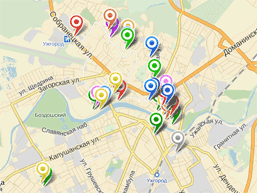
The UzhNU Botanical Garden was founded on November 28, 1945, and has gradually transformed from a small 4.5-hectare plot into an important scientific center with a well-developed infrastructure, an arboretum, and a greenhouse complex.
During the first decades, the garden was actively developed: dendrological, floral, and specialized collections were created; greenhouses, a greenhouse complex, and nurseries were built; and seed exchanges with botanical gardens in various countries were established. The most dynamic period of development occurred in the 1960s–1980s, when thematic displays of flora from various regions of the world were formed and the scientific foundation was strengthened. In 1979, the garden received the status of a monument of garden and park architecture of republican significance and significantly expanded its territory.
The 1990s were a period of crisis: due to financial difficulties, the staff was reduced, seed exchange decreased, and the 1998 flood caused significant damage to the collections and infrastructure. However, since the early 2000s, the garden has been gradually recovering: greenhouses are being renovated, collections are being replenished, exhibits and the arboretum are being organized, and scientific work is being revitalized. Today, the botanical garden covers over 87 hectares across two sites, houses approximately 2,500 plant taxa from various continents, and remains an important scientific and educational resource for UzhNU.
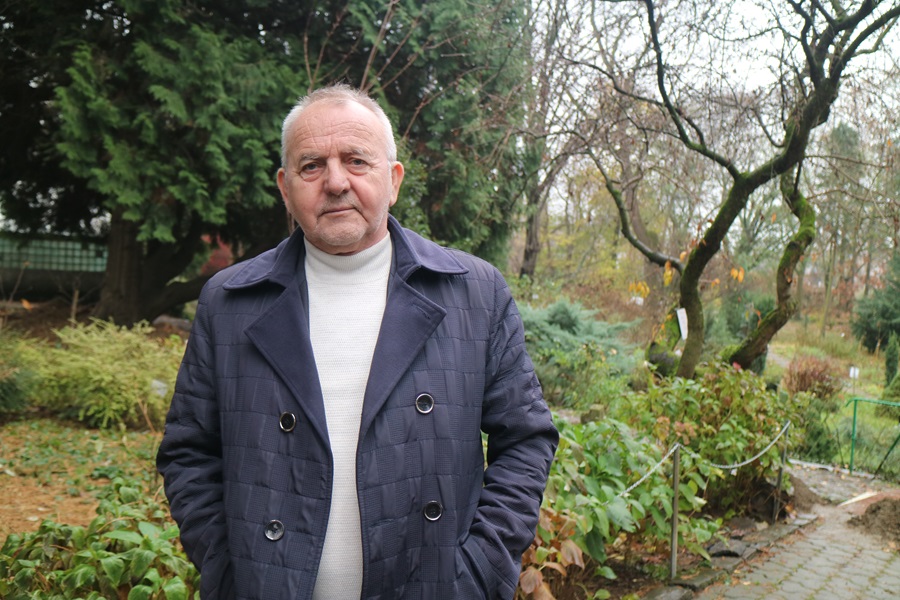
Under the leadership of the current director, Dmytro Soima, the botanical garden is actively modernizing and adapting to contemporary challenges. He has succeeded in renovating part of the greenhouse complex, organizing educational and research areas, and intensifying scientific research and international cooperation. Significant attention is paid to the conservation of rare species, the development of educational programs for students, and the promotion of the garden among city residents and tourists. Thanks to this, the UzhNU Botanical Garden maintains its status as an important natural science center and is constantly expanding its activities. The director of the botanical garden discusses his work in more detail below:
– How would you describe the botanical garden’s journey? What events were turning points?
– Over the course of the botanical garden’s existence, there have been several directors, and each worked under their own circumstances. I came here in 2000, when the late Volodymyr Yuliiovych Slyvka was the head of Uzhhorod State University. At the time, I was a senior lecturer in the department, and the administration decided to send me here because the garden needed serious restoration. If you look at the history, directors changed very frequently back then—literally one after another—and this, of course, had a negative impact on development. There used to be about 80 employees here, but when I arrived, there were only 12. It’s clear that staff cuts and meager maintenance funds severely limited our capabilities.
When I first walked around the grounds, many areas were simply impassable: everything was overgrown and neglected. I had a connection with a military unit at the time, and every Saturday I would come here with a platoon of soldiers. We cleared everything by hand, using pruning shears, slowly but systematically; we restored the paths and plots, making the grounds at least suitable for work.
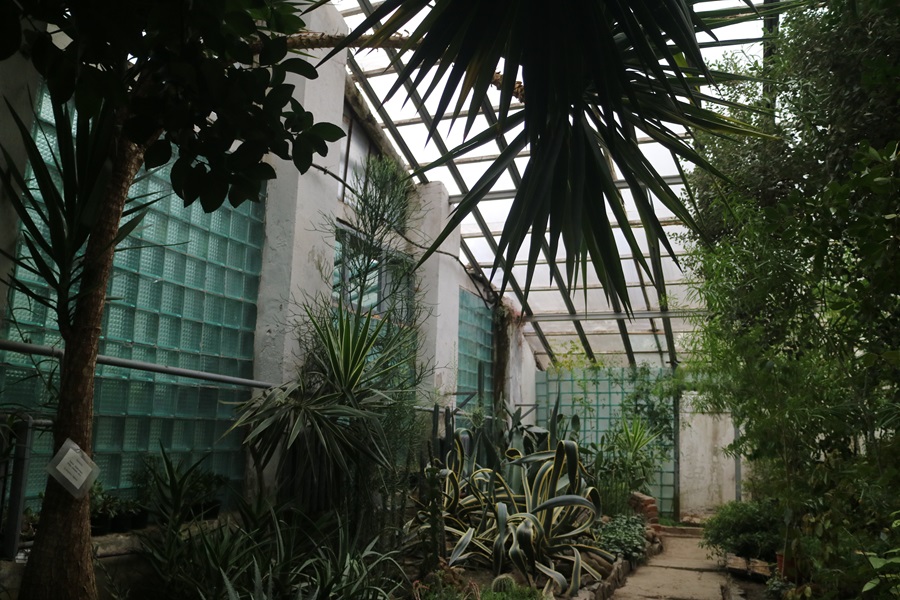
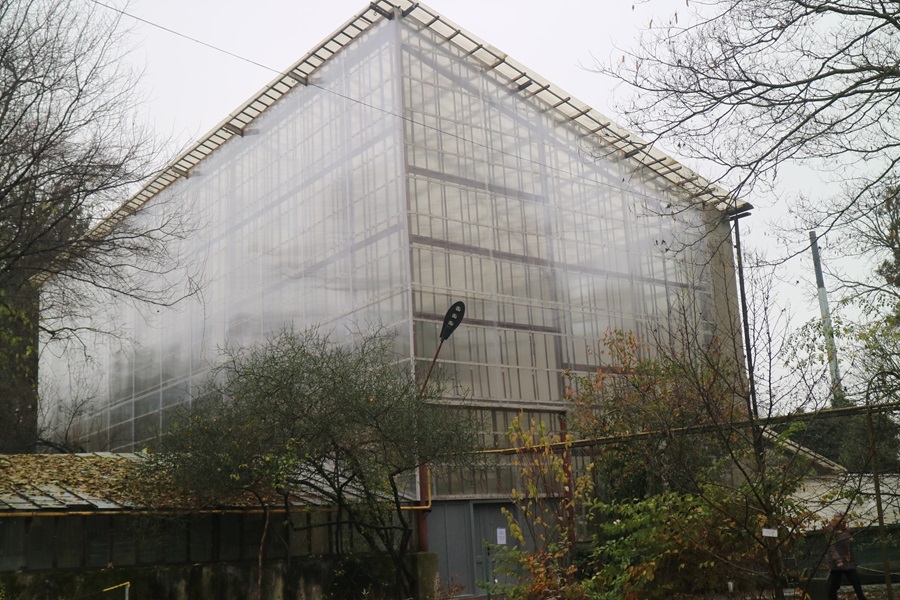
The situation with the greenhouses was also difficult. There were only 60–70 plant species there; much of the glass was broken, and trucks drove inside, bringing in clay and stones—the condition was critical. We covered the greenhouse with plastic, retained the heat, and began restoring the sections: cold, moderate, and warm. This is important because greenhouse plants require very specific conditions: some prefer warmth, others high humidity, and still others subtropical conditions. Without these, the collection cannot be preserved: everything you grow over the summer simply dies in the winter.
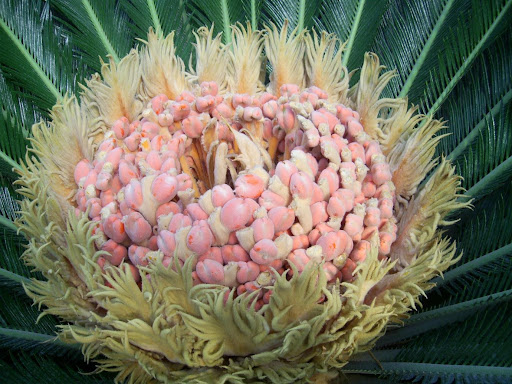
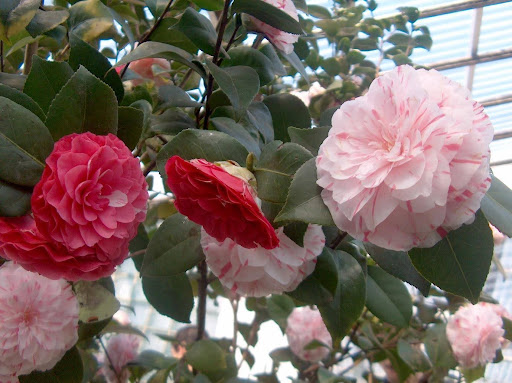
The collection of tropical and subtropical plants features over 900 species, forms, and varieties, which are housed in the exhibition greenhouse and other greenhouses. Most of the species originate from the Mediterranean, India, China, Central and South America, Africa, and Japan. The jewel of the collection is the weeping cycad, of the Cycadaceae family. It has dark green, glossy, pinnate leaves up to 1.5 m long with sharp tips and unique inflorescences, as well as other exotic species—Japanese eriobotrya, Japanese camellia, Japanese aucuba, and Indian azalea.
Therefore, the first step was to ensure the right conditions—heat, humidity, and stability. At the same time, we were renovating the greenhouse behind the conservatory. It is more modern, and there we propagate plants both from seeds and cuttings. The Botanical Garden serves as an educational, scientific, and research base for studying the disciplines in the majors “Biology,” “Ecology,” “Agronomy,” “Landscape Architecture,” and “Forestry,” at the educational and qualification levels of “Bachelor,” “Specialist,” “Master,” “Agricultural Scientist,” and as a base for general ecological and landscape-ecological internships in accordance with the curriculum;
Therefore, we must create conditions where students can learn: where they can see how to take cuttings, how to care for plants, and how to propagate rare species. There are lecture halls, laboratories, and research plots here.
The main objective of the research work at the UzhNU Botanical Garden is the implementation of the theme “Plant Introduction and Acclimatization.” This theme is part of the interuniversity program and the program of the National Academy of Sciences of Ukraine in the fields of plant introduction and acclimatization. Scientific work at the botanical garden is conducted on the following topics: “Analysis of flora and organization of planned plant introduction,” “Introduction and acclimatization by botanical-geographical zones and regions,” “Development of scientific foundations for the conservation, reproduction, and rational use of rare and endangered plant species,” “Scientific foundations for the siting, construction, and reconstruction of botanical gardens and arboretums,” “Vegetative propagation of introduced plants,” and “Study and development of agrotechnical methods for the reproduction of introduced plants.” We register all material that comes to us and cooperate with quarantine services. Because along with plants, dangerous pests and diseases may arrive, which can harm not only the garden but also spread throughout the city or region. We maintain international contacts—with more than 150 botanical gardens worldwide, on virtually every continent. We exchange seeds, but we carefully study each species: whether it can adapt here, and whether it is worth obtaining. There is no point in requesting seeds of a plant that is guaranteed not to germinate or withstand the local climate.
The botanical garden has assembled a large collection of rare and endangered plant species listed in the “Red Book of Ukraine.” We study methods for the propagation, rational use, and conservation of such rare plants as Heuffel’s crocus, sulfur-flowered eremurus, common adonis, alpine aster, common liverwort, dogtooth violet, spring snowflake, and alpine edelweiss.
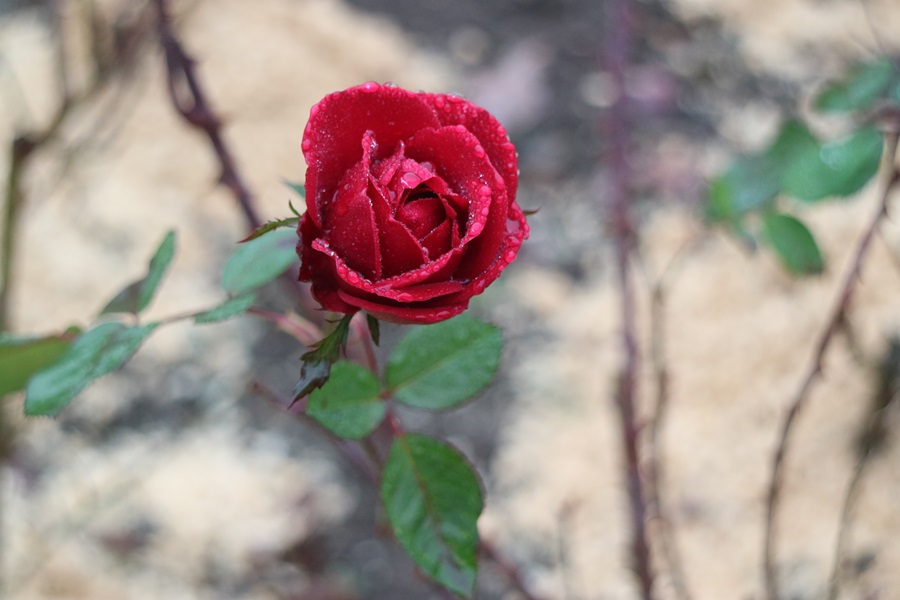
The collection of flowering plants includes annuals, biennials, and perennials, as well as bulbous plants, and comprises over 800 taxa
– Which of the previous directors’ leadership would you highlight?
– I remember them all very well. I’ll start with Semion Ivanovych Zaitsev—he was the director when I was a student.
Back then, we were actively involved in community work days: we dug up the soil, cleaned the grounds, and tended to the plants. Students had a different attitude toward that kind of work. I believe that was one of the garden’s peak periods of development.
After that, directors changed more frequently. And that’s always a problem—it’s hard to accomplish anything significant in a short time. That’s why a lot depended and still depends on the university administration: whether there is support, whether there is funding. Over the past 3–4 years, we’ve done a great deal in terms of renovating the greenhouse. Just replacing the polycarbonate cost 700–800 thousand hryvnias every year. Thanks to this, we were able to significantly retain heat. This year will be experimental: we’ll monitor the temperature conditions and only then will we be able to plan for expanding the collections.
– How do you see the future of the botanical garden? What are the plans?
– University Rector Volodymyr Ivanovych is currently very actively supporting the development of the botanical garden. There is a strong desire to make the area truly unique—for students, residents, and tourists alike. Previously, we worked with Hungarian partners on the idea of a natural history museum. We are currently implementing a Polish grant—building a reservoir to collect rainwater—and there is also an idea to renovate the botanical garden grounds.
The reservoir will be located next to the administrative building. It is part of a larger system where all rainwater from the roofs and the grounds is collected in a tank and then used for irrigation. Due to water shortages, this is very important. Especially in the summer, when there is little rain but many plants that need watering.
The area around the reservoir will be landscaped: there will be benches and an outdoor classroom for open-air lessons. Work is already well underway and is expected to be completed by the end of this year. This is just the first phase. The plan is to transform the entire botanical garden into an educational, scientific, and recreational area: beautiful, well-maintained, and appealing to both residents and visitors. These are grand and ambitious plans, but the start is very promising, so much will be accomplished in the coming years.
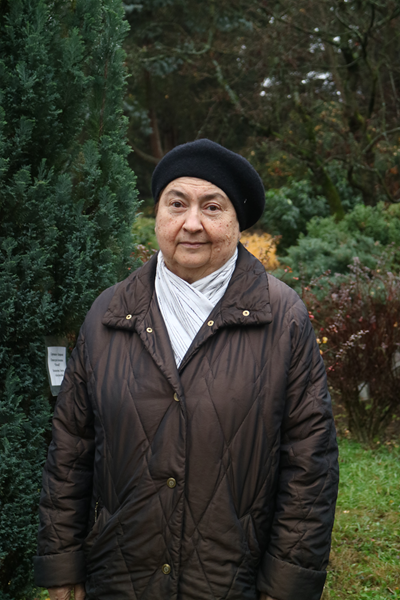
Behind the green alleys, the shade of exotic trees, and the warmth of the greenhouses lies the daily labor of people who have been caring for this corner of nature for eight decades. Deputy Director Lyudmila Omelianka talks about the unseen part of the work.
– Please tell me, which collection is unique to you?
— For me, it’s definitely the rhododendrons—there’s no other collection like it in the region. I came here to work in 2006. I was tasked with restoring the rhododendron collection, which was destroyed during a flood
We received the first seedlings from the Hryshko and Fomin Botanical Gardens in Kyiv, and our colleagues from the Lviv Botanical Garden of Ivan Franko University gladly shared planting material with us. Currently, the rhododendron collection at the UzhNU Botanical Garden comprises 27 species.
Today, in the greenhouse, you can see rhododendron seedlings grown from seeds obtained from Poland, Romania, and the Baltic states; they will eventually join our collection. Rhododendrons adorn the mountainous regions of Europe, Asia, and North America and are found from the Arctic to the equator. Their name derives from the Greek words rhodon—“rose”—and dendron—“tree.” Among them are shrubs of various heights, dwarf and creeping varieties, and occasionally trees reaching up to 18 meters. They include deciduous, semi-evergreen, and evergreen species.
They prefer moist, partially shaded north-facing slopes with humid air, frequent fog, and loose, organic-rich acidic soils. Their roots host mycorrhizae, which improve nitrogen uptake. Two species of these plants grow naturally in Ukraine: the yellow rhododendron in the Zhytomyr region and, here on the Chornohora Ridge, the Carpathian rhododendron.
The soil in the botanical garden is heavy clay, so we have to dig a hole and replace the soil: part topsoil and sand, part acidic peat. The soil pH must be 3.8–4. You rarely find such peat in stores. So we collect litter from the pine forest, along with fallen, decomposed leaves. To keep the soil from drying out, we mulch with pine bark or fresh pine needles. Rhododendrons have a shallow root system, so this is important.
The collection’s blooming season begins in early spring and ends in early June. Come and admire the blooms of our rhododendrons.
– And which plants require the most complex, intensive care?
– The answer to this question is also rhododendrons. They bloom and propagate via cuttings, but they require significant care. First, soil heating and a misting system are necessary for propagation. The soil must be brought in separately because ours isn’t suitable—that’s also a costly endeavor. Second, the work is very meticulous: the seedlings are small, they need to be pricked out, and they don’t handle that well. They only bloom in their fifth year. You have to keep them in greenhouses or cold frames for those five years before planting them in the ground. And even after planting, it can take another 2–3 years for them to bloom.
I also worked with local plant species. We often brought in our Carpathian variety—it grows for a year or two, then dies. The summer is difficult for it because in nature it grows at high altitudes where it’s constantly foggy. We have a dry summer climate, and even if you change the soil and add acidity, the humidity isn’t right. I worked with material from the nature reserve: they brought in plants, and they survived for a year or two, but then in the third year they stopped blooming and died. Although this species is present in collections in Lviv and Kyiv, because there is more moisture in the air there.

Nadiia Kopynets, Head of the Department of Natural Flora and Dendrology, has spent the longest professional career alongside the UzhNU Botanical Garden—56 years, to be exact.
– Have the plants planted in the garden’s early years survived?
– I joined the Botanical Garden in the fall of 1969. Semen Zaitsev was the director at the time. Generally speaking, yes, they have survived. Among the very first—from the flora of America—was the Gleditsia, planted in 1949. In 1948, ginkgo trees were planted. The Kobus magnolia was already there in 1950, and the Sulange magnolia in 1953. Among the earliest were also eucomias and the gutta-percha tree. They are still there today.
Chestnuts were planted back then: red-fleshed, yellow, and common chestnuts. Among the first, in 1948–1949, were also ash trees—American ash, then five-lobed ash, and the aucuba-leaved variety. It’s still there today. In the 1950s, we planted paulownia and plane trees. Most of the first trees came from a nursery in the village of Chertezh. And ornamental shrubs were collected throughout Transcarpathia, mostly in Uzhhorod. Like, for example, the Ussuri spirea—it was found in Uzhhorod among enthusiasts. Next came the Kalikarpus and the Carcasia. There were four different species of Carcasia. This was around the 1950s–1960s. To be precise, you can check the surviving journals. Only one did not survive—the Hinensis. It was simply snapped by the wind and died.
From the local flora, Norway spruce and larch were planted. Then came common oak and hornbeam. Cooperation with other botanical gardens was established later, in 1949 and 1950, when seed exchange between botanical gardens began. The first Seed Index was published in 1949; Vladimir Grabar was primarily responsible for seed collection.
– In your opinion, which collections of the botanical garden are the most valuable?
– Currently, we have 10 species of magnolias—specifically species, not cultivars. We have a tulip tree planted in 1950—from the nursery in the village of Chertezh. Among the conifers, there are also valuable specimens. These include the giant sequoia, metasequoia, and Calocedrus (river cedar). There is a large collection of thuja. Western thuja is represented by approximately 15 different forms: columnar, spherical, and variegated.
– Even ordinary people, not scientists, notice that winters are getting warmer. Perhaps you notice this from year to year, and how does it affect the garden?
– Most plants that used to need to be covered for the winter now overwinter normally, because we no longer have such cold winters. The only problem is precipitation. In the past, there was a lot of snow in winter; it melted, and the soil became saturated with moisture. But now summers are dry, and there isn’t enough of that.
For example, there are plants that couldn’t be grown here before. But now, thanks to global warming, they’ve taken root. Take the evergreen large-flowered magnolia, which used to grow only in warm greenhouses—now it survives winters just fine. We even planted a noble laurel—it’s been growing outdoors for four years now. It hardly needs any cover; we just lightly mulch the soil with sawdust or leaves to keep it from freezing.
Then there are the persimmons—the Canadian varieties are more frost-hardy, while the Chinese ones are a bit less so; they used to freeze, but now they grow just fine. We used to always cover the fig tree with leaves for the winter, but now it grows without any cover, blooms, and bears fruit. Persimmons in the botanical garden—Virginian and Caucasian—are wild species.
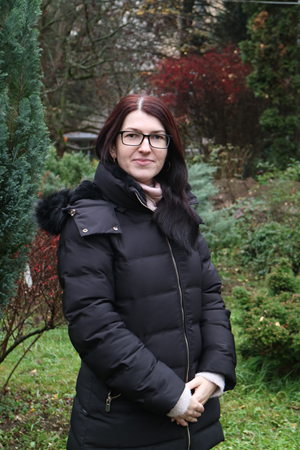
For over a century, there has been a traditional form of cooperation among botanical gardens worldwide known as the Index Seminum. This is a catalog of seeds that a botanical garden can offer to other institutions for scientific exchange. Each garden compiles its own index annually: a Latin-language list of species, their origins, and growing conditions. Based on these lists, botanical gardens exchange seeds free of charge, expanding their collections, preserving rare species, and fostering international scientific collaboration. More about cooperation The index at the UzhNU Botanical Garden is explained by Yelyzaveta Stehura, head of the Department of Plant Introduction and Acclimatization.
– We provide a list of plant species whose seeds we can send to other gardens. We indicate our geographic location and coordinates so that anyone can find us, and we specify the climatic conditions. When we order seeds, we check where that botanical garden is located: whether the seeds will germinate here or die. And so we proceed with caution.
— How many botanical gardens do you collaborate with?
— On average, we receive about fifteen to twenty a year. The most exchanges take place with Romania, Hungary, Latvia, Italy, and even Iceland.
— And is all of this free?
— Yes, everything is “on a friendly basis.” We send and receive plants without payment. Every transaction is recorded: we keep a logbook, submit the plants to the quarantine inspection, they verify that the plant is healthy, and grant permission for planting. We try not to break the rules, because any violation could be dangerous for the flora of Transcarpathia. A new plant may be infected, so we don’t plant anything without quarantine permission. There is a quarantine greenhouse where we germinate plants, check their condition, and only after confirmation are they allowed to be planted in open ground. The procedure is very strict, and we adhere to it.
The UzhNU Botanical Garden has also long been one of the city’s most interesting attractions, eagerly visited by tourists from all over Ukraine and abroad. They are drawn by the combination of rare plants, a peaceful atmosphere, and the opportunity to see exotic species that are usually found only in specialized collections. That is why the garden not only fulfills an important scientific and educational function but also plays a significant role in Uzhhorod’s tourist appeal. Organized groups of children from various regions hold a special place—they arrive by bus to take educational tours and see rare plants up close. There are particularly many visitors during the period of martial law: the botanical garden is visited daily by internally displaced persons, for whom this green oasis becomes a space of peace and discovery.
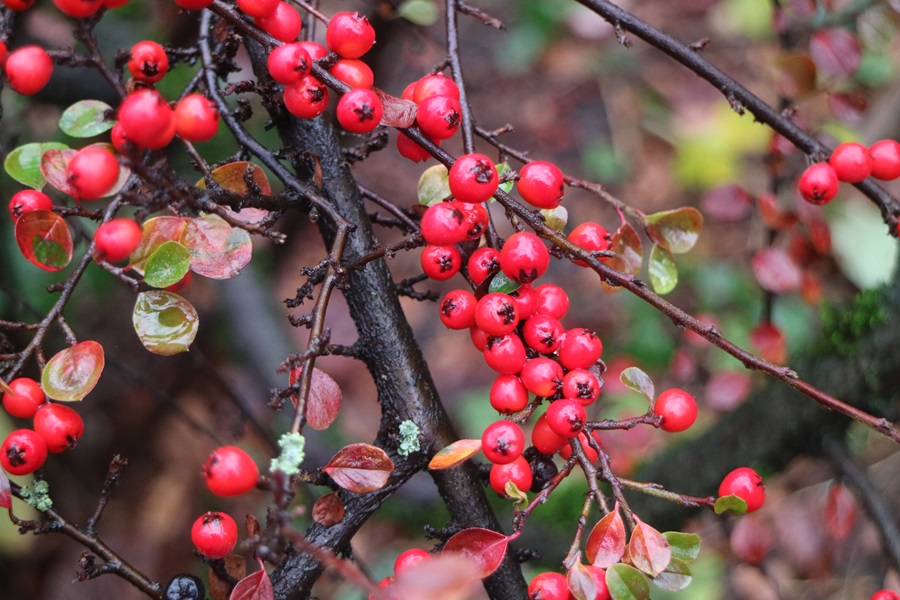
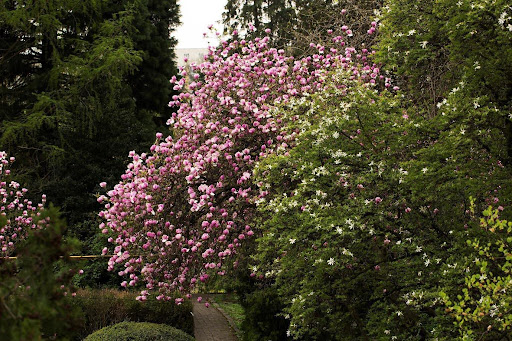
Garden staff say that tourists are most fascinated by the conifer collection—especially those coming from southern Ukraine, where such a variety of conifers is rarely found. In the spring, cherry blossoms, magnolias, and rhododendrons create a real buzz; in the summer, visitors are drawn to roses and blooming flower beds; in the fall—the decorative foliage of maples, oaks, and other species. Children, however, are most delighted by the exotic trees and shrubs—the tulip tree, the vibrant magnolias, and the rhododendrons. And young visitors from the mountainous regions—Mizhhiria, Rakhiv, and Bereznyi—are given a particularly warm welcome here. For many of them, the botanical garden is a true discovery: a place where they see plants for the first time that they had previously only read about.
The botanical garden’s 80th anniversary is an opportunity to once again appreciate its contribution to the development of science, education, and Uzhhorod’s appeal as a tourist destination. Having come a long way, the garden remains a place that brings together researchers, students, and visitors to the city.
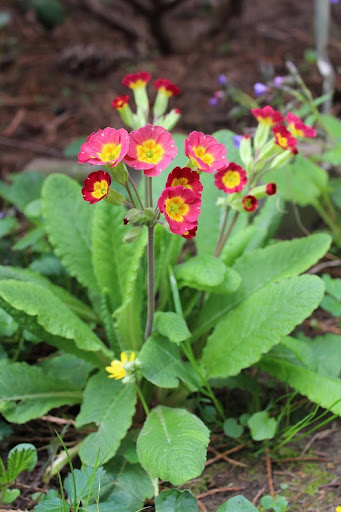
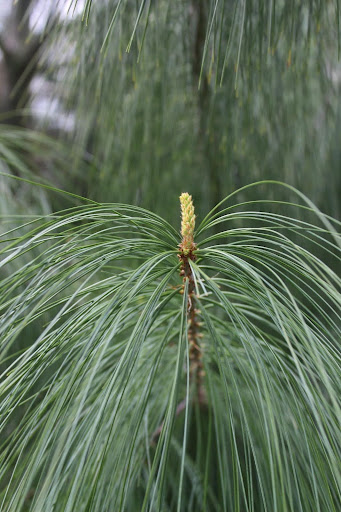
Finally, here are a few photos of the botanical garden during the warmer months.
Підготувала Ганна Фельцан,
Інформаційно-видавничий центр