Ambassador Extraordinary and Plenipotentiary of the Kingdom of the Netherlands to Ukraine Jennes de Mol visited UzhNU
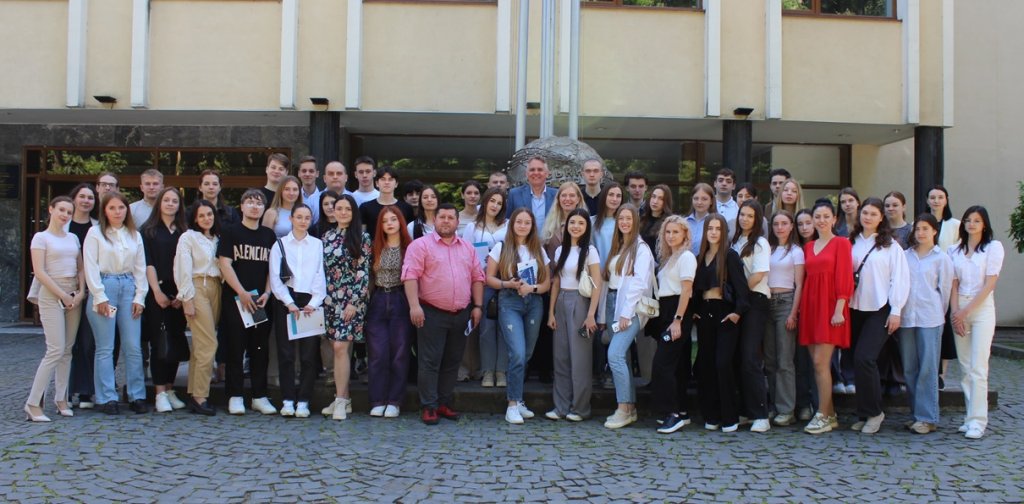
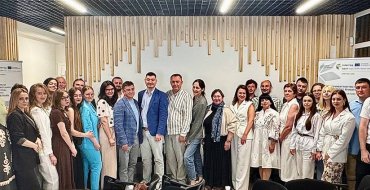
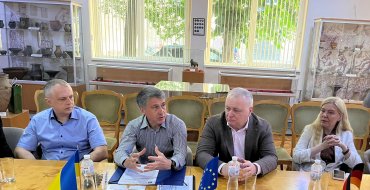
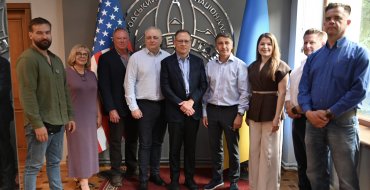
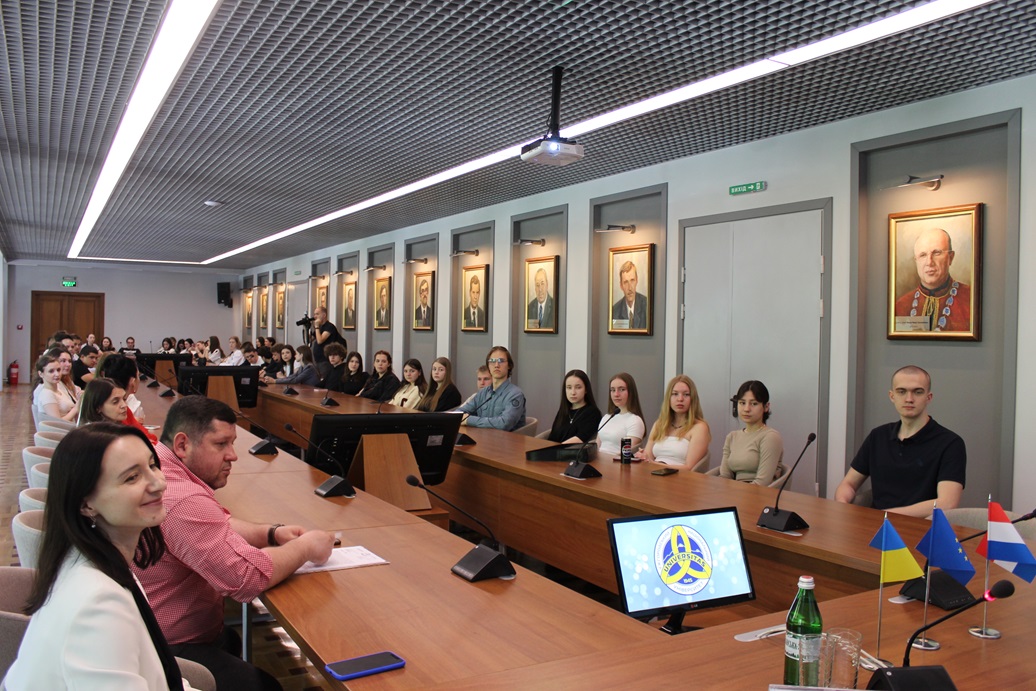
As part of the celebration of Europe Day, the 74th anniversary of the Schuman Declaration, which marked the beginning of the European Union, Ambassador Extraordinary and Plenipotentiary of the Kingdom of the Netherlands to Ukraine Jennes de Mol visited UzhNU. The diplomat delivered a speech and met with students.
Vice-rector Myroslava Lendiel introduced the guest of honour: ‘Today is a festive day for Ukrainians, despite the problems, grief and sadness that permeate our present. We are very pleased that for the second year in a row we are celebrating Europe Day with the whole of Europe. Before that, our tradition was not quite correct - we celebrated on a different day. Now, because we want to unite into one European family, we celebrate on 9 May. Our university teaches more than 20 disciplines dedicated to European topics. Also this year, we are launching a new study programme at the Department of Political Science and Public Administration called European Studies. And I think this is just the beginning. These days we have prepared a number of different events for students. And today we are honoured to have a conversation with the Ambassador Extraordinary and Plenipotentiary of the Kingdom of the Netherlands to Ukraine, Jannes de Mol, who will talk about Ukraine for Europe and Europe for Ukraine.’
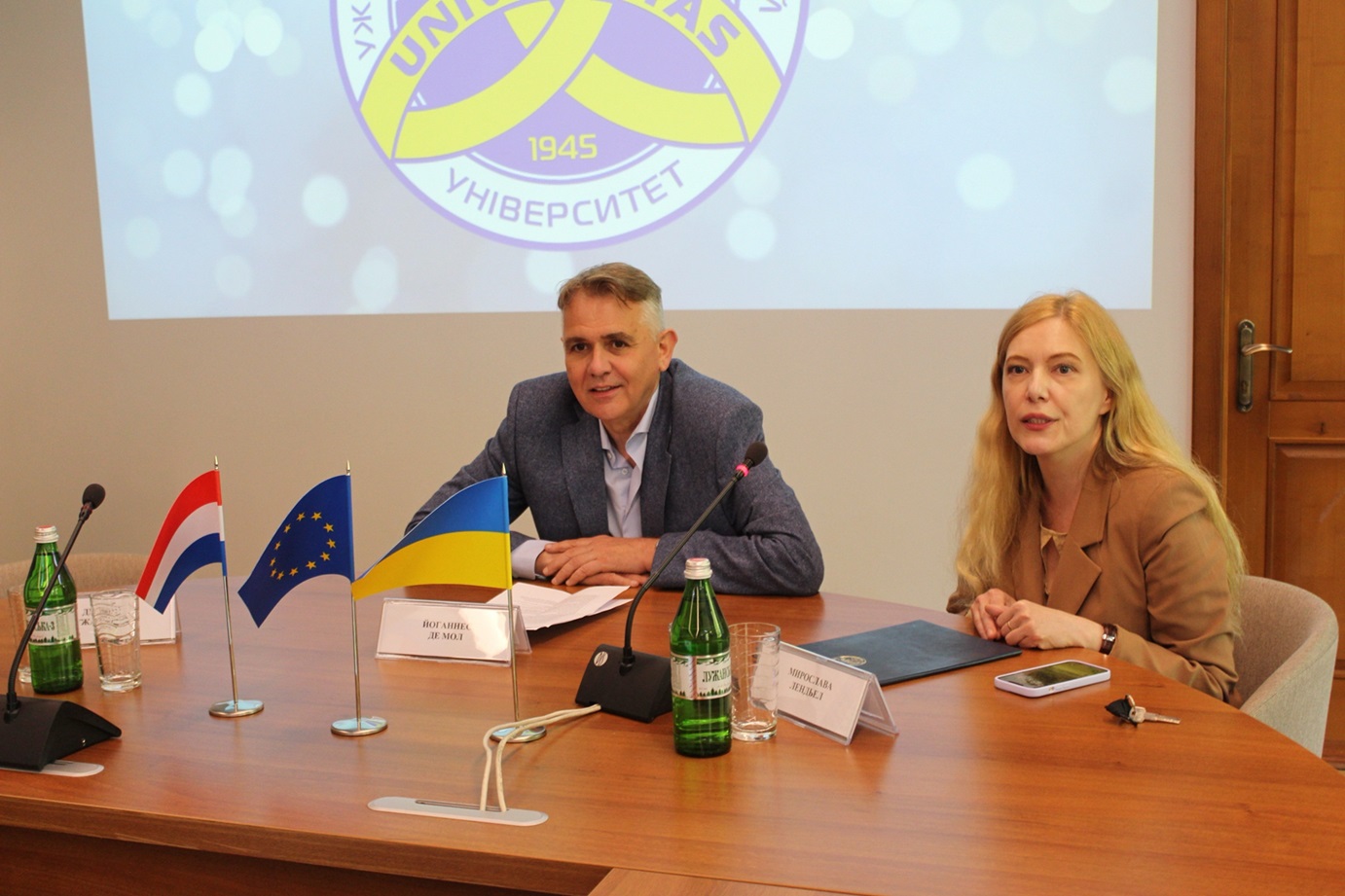
‘I like the atmosphere of universities, so I am happy to be with you today,’ said Jens de Mol, ‘especially on a day like this - it is a religious holiday and also Europe Day. As you know, Russia celebrates Victory Day today. I once understood that Europe Day is about the future, independence, sovereignty, and equality. And the Russian Victory Day is about eternal contemplation of the past. Moreover, the European future is being built for you right now. This date commemorates the Schuman Declaration of 9 May 1950, created by Robert Schuman, which proposed to unite the coal and steel industries of France and West Germany.This led to the creation of the European Coal and Steel Community, the first European Community. An economic union of countries that also aimed to ensure peaceful relations between countries and prevent military conflicts. We are happy that the Netherlands is able to support Ukraine. And we will continue to help in the areas of security, defence, economy and cultural cooperation. This demonstrates our commitment to Ukraine.
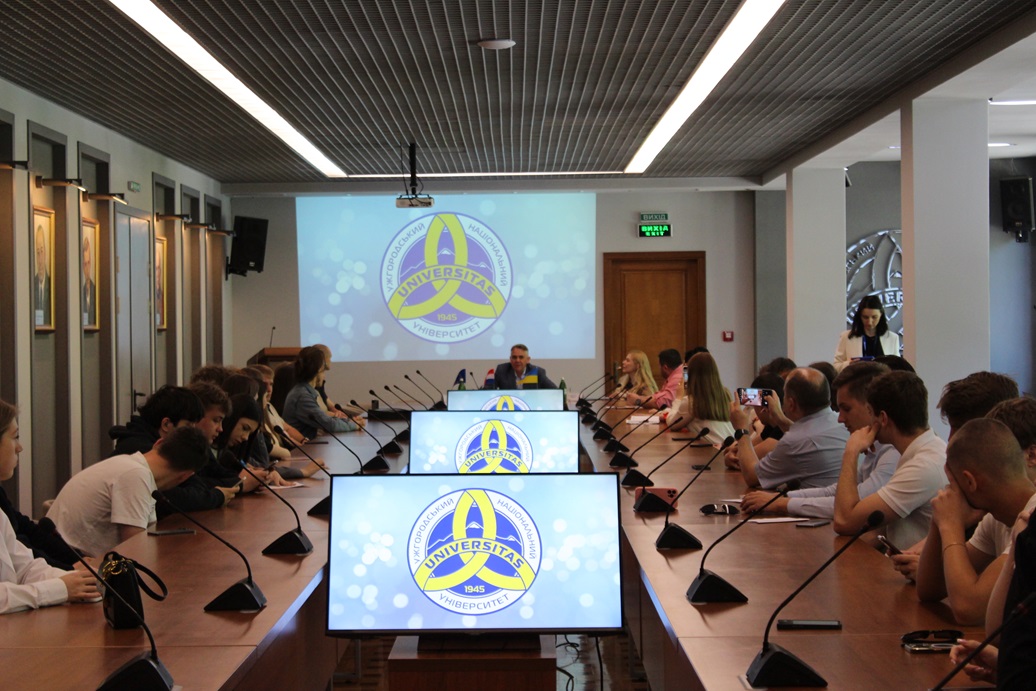

Later, students had the opportunity to ask questions to the Ambassador Extraordinary and Plenipotentiary. In particular, they concerned the full-scale Russian invasion, learning foreign languages, economic issues, European integration, education, and support for Ukraine. The conversation was informative and extremely relevant.
The event was held within the initiative of the Institute for Central European Strategy ‘Dialogues on Europe’ in cooperation with Uzhhorod National University.
By Hanna Feltsan,
Information and publishing centre