
Linguistic biographies of war: Ukrainian researchers, with the support of Swiss partners, are investigating how stress and migration change linguistic and sociocultural codes

На базі НДЦ соціології мови, який функціонує при кафедрі соціології і соціальної роботи УжНУ, триває виконання наукового проєкту «Динаміки мовної свідомості громадян України в умовах війни та міграції» за фінансової підтримки Центру управління та культури в Європі (GCE-HSG) Санкт-Ґалленського університету (Швейцарія).
Створення підрозділу в травні 2023 р. стало інституційною відповіддю на виклики, пов’язані як з подоланням спадщини колоніальних мовних деформацій, так і з екстремальними обставинами повномасштабної війни на території України. У стратегічному партнерстві з Групою соціолінгвістики Інституту української мови НАНУ ужгородські науковці зосереджені на аналізі трансформації мовної та соціокультурної ідентичностей внутрішньо переміщених осіб (ВПО) в умовах нового територіального середовища. Використовуючи інноваційні якісні методи, зокрема глибинний аналіз мовних біографій переселенців, дослідники вивчають, як екстремальні обставини впливають на мовну свідомість і поведінку населення.
Based at the Research Center for the Sociology of Language, which operates under the Department of Sociology and Social Work at UzhNU, a research project entitled “The Dynamics of Language Awareness among Ukrainian Citizens in Conditions of War and Migration” is being carried out with financial support from the Center for Governance and Culture in Europe (GCE-HSG) at the University of St. Gallen (Switzerland).
The creation of the unit in May 2023 was an institutional response to the challenges associated with overcoming the legacy of colonial language deformations and the extreme circumstances of full-scale war on the territory of Ukraine. In a strategic partnership with the Sociolinguistics Group of the Institute of Ukrainian Language of the National Academy of Sciences of Ukraine, Uzhhorod researchers are focusing on analyzing the transformation of the linguistic and sociocultural identities of internally displaced persons (IDPs) in a new territorial environment. Using innovative qualitative methods, including in-depth analysis of the linguistic biographies of displaced persons, researchers are studying how extreme circumstances affect the linguistic consciousness and behavior of the population.
It is encouraging that in the spring of 2025, the research topic received international support: the Center for Governance and Culture in Europe (GCE-HSG) at the University of St. Gallen (Switzerland) agreed to fund the research project "The Dynamics of Language Awareness among Ukrainian Citizens in the Context of War and Migration ," which involves conducting a sociolinguistic study in four regions of Ukraine — Odesa (south), Sumy (northeast), Zakarpattia (west), and Kyiv (center) — the findings of which will be presented in 2026 at a scientific conference at Uzhhorod National University.
The project has the following key objectives: 1) to study the dynamics of linguistic awareness and linguistic behavior of the indigenous inhabitants of the regions under study in relation to their ethnic origin and main language(s) of communication, 2) to analyze the transformation of the linguistic consciousness and behavior of IDPs and their linguistic and cultural adaptation in new regions; 3) to study changes in the linguistic landscape of selected regions in the context of the ongoing war.
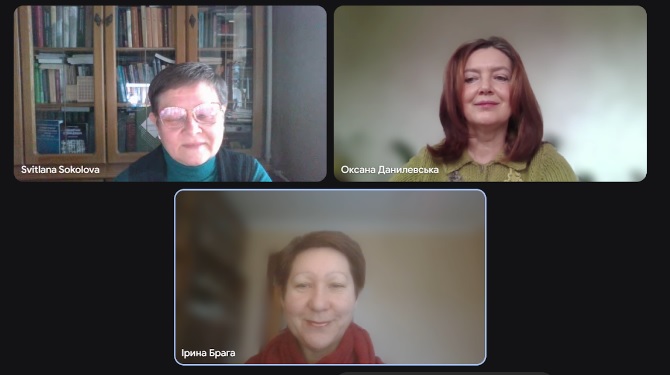
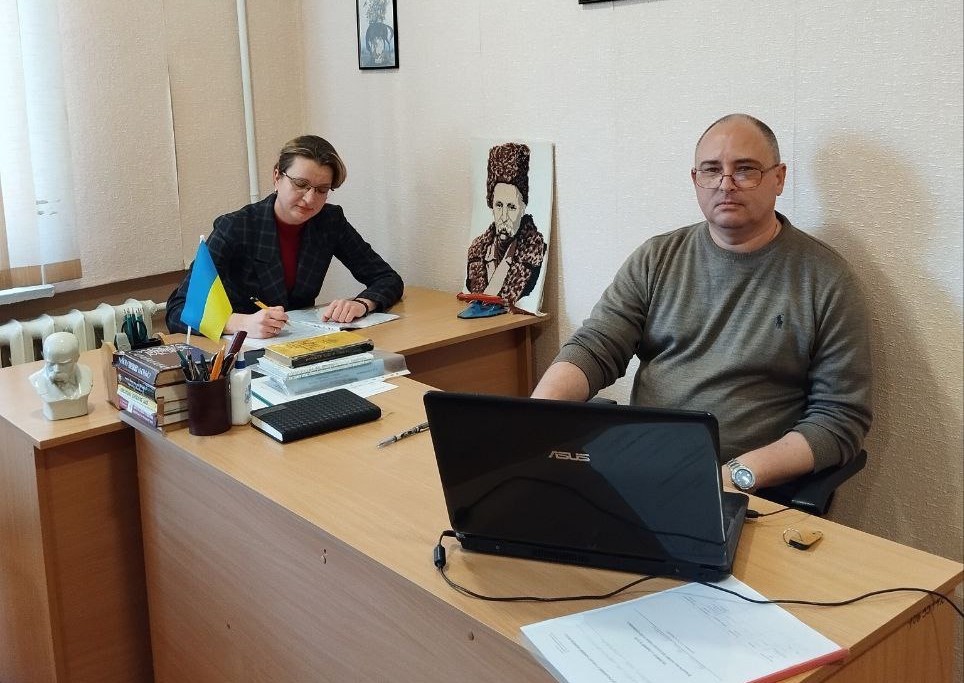
Researchers from the Research Center for the Sociology of Language at Uzhhorod National University (Prof. Halina Shumytska, Assoc. Prof. Nadiia Kichera) in collaboration with researchers from the Institute of Ukrainian Language of the National Academy of Sciences of Ukraine (Prof. Svitlana Sokolova, Ph.D. in Philology Oksana Danylevska, Assoc. Prof. Iryna Braha) and Izmail State University of Humanities (Prof. Andrii Kolesnykov, Assoc. Prof. Maryna Deliusto) – each research group focuses on its own tasks
– researching changes in the linguistic consciousness of internally displaced persons in Zakarpattia in the context of a new multicultural environment, as well as the impact of active migration on the linguistic situation in Zakarpattia as a cross-border region, on the one hand, and the proximity of the border with EU countries on the linguistic consciousness of Zakarpattia residents, on the other.
In-depth semi-structured interviews, which researchers continue to record, show that it is important for internally displaced persons to both preserve and modify their personal and group identities in the sociocultural environment of Zakarpattia, which is multicultural by nature and long-standing historical traditions. Therefore, adaptation in this environment requires openness on both sides: internally displaced persons and the local population, which wants to tell its story, but this does not always correspond to reality. Therefore, the testing of new mechanisms of intercultural integration and the interpenetration of linguistic and cultural practices in Zakarpattia is once again timely.
In addition to institutional means of support and social adaptation of migrants, the role of public organizations, scientific communities, etc. is important in these processes. For scientific and educational institutions such as Uzhhorod National University, it is particularly important to adapt young people, develop models of successful social integration, and develop recommendations for optimizing adaptation processes in modern conditions, etc.
A Kyiv-based research group is working on summarizing methodological approaches to studying the linguistic behavior of the population, as well as studying the socio-mental and linguistic mechanisms of transition from Russian to Ukrainian in the context of full-scale war. In this regard, the research focuses primarily on the linguistic biographies of individuals who have changed their primary language of communication from Russian to Ukrainian, as well as ethnic Russians and ethnic Ukrainians with Russian as their first language who live in the capital and the Kyiv region, in the city of Sumy and the Sumy region (permanent residents and displaced persons). In addition, researchers conducted a survey on language issues among cadets of the military higher education institution, the results of which are summarized in the article “Language transformation of young people in a military environment during a full-scale war” (to be published in issue 4 of the journal “Ukrainian Language” in 2025).
Observations on the dynamics of linguistic awareness among different ethnic groups in southern Odesa region (the region is home to Ukrainians, Bulgarians, Moldovans, Romanians, Gagauz, Albanians, Lipovans, and Roma) is the focus of the Izmail group, which notes that representatives of all ethnic groups have come to recognize the importance of the Ukrainian language as the state language, as a factor in ethnic consolidation, as a factor in preserving the statehood of Ukraine, and also treat it as a prestigious language with positive aesthetic, emotional-evaluative, and associative characteristics. Ethnic Russians, in particular the Lipovans, who, having lost the support of their dialect from the literary standard, are aware of the importance of the Ukrainian language, also demonstrate particular changes in linguistic consciousness.
At the same time, researchers emphasize the importance of taking into account the peculiarities of the mentality of ethnic groups: for example, the Lipovans, who were persecuted by the Russian Empire in their time, are not sympathetic to modern Russia; the Gagauz, despite the weak development of their literary standard and its similarity to the Turkish dialect, remain a strong ethnic group, whose important unifying principle is Orthodox Christianity, which distinguishes them from the Turks; the Roma, due to their national specificity of social behavior (frequent changes of residence, the spread of their involvement in criminal activity), firstly, were not fully reflected in previous population censuses (in fact, there are significantly more of them), and secondly, retain their language despite the absence of its literary standard and Romani language education, as they use it as argot (a language that other ethnic groups do not understand). Therefore, the tools for monitoring language changes in southern Odesa region, in addition to issues related to the transformation of language awareness regarding the Ukrainian and Russian languages and their literary forms, also include extended questions regarding changes in language awareness regarding dialectal forms of national languages and their correlation with literary forms.
The results of the study of transformational processes, particularly in terms of linguistic identity, will have practical significance, as the project involves the creation of a comprehensive database on the linguistic situation in the region(s), the development of new methodological approaches to studying the linguistic consciousness of the population in wartime, the development of regional expertise in the field of language policy, the archiving of materials on the linguistic situation during wartime, the preservation of evidence of linguistic transformations during the war period, etc.
At the same time, theoretical knowledge about how extreme circumstances affect people's linguistic awareness and linguistic behavior can be enriched, which will be important for domestic and global sociolinguistics. In addition, the study will provide a better understanding of the relationship between the traumatic experience of war and changes in the linguistic consciousness of the population, which is important for the development of psychological support and rehabilitation programs and the development of new mechanisms for linguistic and sociocultural integration/reintegration.


